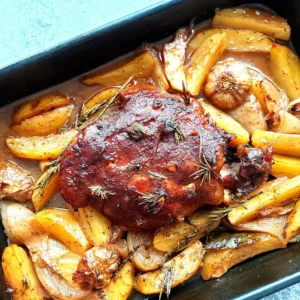
Greek Slow Roasted Leg of Lamb (Fall-Off-the-Bone!)
A tender, juicy, and impossibly delicious Greek Slow Roasted Leg of Lamb, slow-cooked with garlic, rosemary & thyme until perfectly fall-off-the-bone — this is the ultimate Sunday roast and Easter Sunday centerpiece.
Ingredients
- 2.5 lb (1.15 kg) leg of lamb (bone in)
- 2 cups beef broth
- 1 cup red wine (dry)
- ¼ cup fresh lemon juice
- 1 TBSP yellow mustard
- 2 medium onions (peeled and quartered)
- 2 garlic heads (unpeeled, halved)
- 3 rosemary sprigs
- 5 thyme sprigs
- 2 bay leaves
- ½ TBSP oregano
- 2 TBSP olive oil
- 4 medium potatoes (cut into wedges)
- 1-2 tsp paprika
- 2 tsp salt
- ½ tsp pepper
Instructions
Prepare & Marinate the Lamb
- Rub the lamb with salt, pepper, and paprika.
- Using a small, sharp knife, make about 15 deep incisions all over the lamb. Cut 7-8 garlic cloves in half and tuck them into each incision, followed by small sprigs of rosemary. Drizzle the lamb generously with olive oil.
- If you have the time, let it marinate in the fridge overnight. Even 3–4 hours will make a real difference. The longer it sits, the deeper the flavor.
Make the Braising Liquid
- Take your leg of lamb out of the fridge at least an hour before cooking — bringing it to room temperature ensures more even cooking throughout.
- Preheat the oven to 340°F (170°C).
- While the lamb is coming to room temperature, prepare the braising liquid. In a small bowl or jug, whisk together the red wine, beef broth, yellow mustard, lemon juice, and oregano until well combined. Set aside.
Prepare the Pan
- Arrange the potatoes, onions, and halved garlic heads (face down) in the bottom of a deep roasting pan. Place the lamb on top, and tuck in the fresh rosemary and thyme sprigs and bay leaves among the vegetables.
- Pour the braising liquid over the potatoes and vegetables — not over the lamb itself.
Cover & Seal the Pan Tightly
- Cover the roasting tin with a layer of baking paper directly over the lamb, then wrap the entire tin tightly with aluminium foil, pressing firmly around the edges to create a proper seal - the tighter, the better. This way, the steam remains trapped inside, the pan juices don't evaporate, and the meat stays incredibly moist and juicy.
Low & Slow Roasting
- Roast at 340°F (170°C) for 2 hours 45 minutes. Do not open the foil or the steam will escape and the pan juices will evaporate.
- Note on timing: Every oven is different, and every piece of meat is different. Start checking after 2 and a half hours. The lamb is ready when the meat pulls away from the bone effortlessly, and a fork slides in with zero resistance.
Uncover & Build That Golden Crust
- Once the 2 hours 45 minutes are up, remove the foil and baking paper and crank the oven up to 410–430°F (210–220°C). Roast uncovered for a further 20–25 minutes until you get that deeply golden-brown caramelised crust. Every 10 minutes, baste the lamb generously with the pan juices to build that glossy, caramelised crust.
Rest the Lamb
- Rest the lamb for at least 20–30 minutes, loosely tented with foil. This allows the juices to redistribute back through the meat. While the lamb is resting, prepare the gravy.
Make the Gravy
- Remove the rosemary and thyme sprigs and bay leaves from the pan and transfer the potatoes to a serving platter.
- Squeeze the halved garlic heads into the pan juices.
- Pour all the pan juices into a blender and let it sit for a couple of minutes until the fat settles on top. Skim off as much fat as you can, then blend everything together until smooth.
- Taste and adjust the seasoning with a little salt, pepper, or lemon juice, if needed. If you prefer a finer, more elegant sauce, pass it through a fine mesh strainer, but you can serve it as is — this rustic version is just as beautiful and full of flavour.
Serve & Enjoy
- Arrange the herb-roasted potatoes on a large warm serving platter and place the lamb on top. Serve the gravy in a warm jug on the side. Enjoy!
Notes
Marinate overnight if you possibly can — Once you've rubbed the lamb with the condiments, cover and refrigerate overnight. This is the biggest flavour upgrade you can make — the seasoning penetrates deep into the meat, and the difference is remarkable. Even 3–4 hours makes a real difference, but overnight is best.
Bring the lamb to room temperature — Take it out of the fridge at least 1 hour before cooking. This ensures more even cooking throughout.
The tighter the foil seal, the better — Press those edges down firmly. A loose seal means escaping steam and a drier result.
Don't rush the resting time — 20–30 minutes minimum. It makes a genuinely noticeable difference to how juicy the meat is when you carve.
Leftover lamb is spectacular — Shred it and pile into warm flatbreads with tzatziki and pickled onions for an incredible next-day lunch.