A tender, juicy, and impossibly delicious Greek Slow Roasted Leg of Lamb, slow-cooked with garlic, rosemary & thyme until perfectly fall-off-the-bone — this is the ultimate Sunday roast and Easter Sunday centerpiece, a recipe passed down through generations that invites you to sit down, slow down, and taste the tradition.
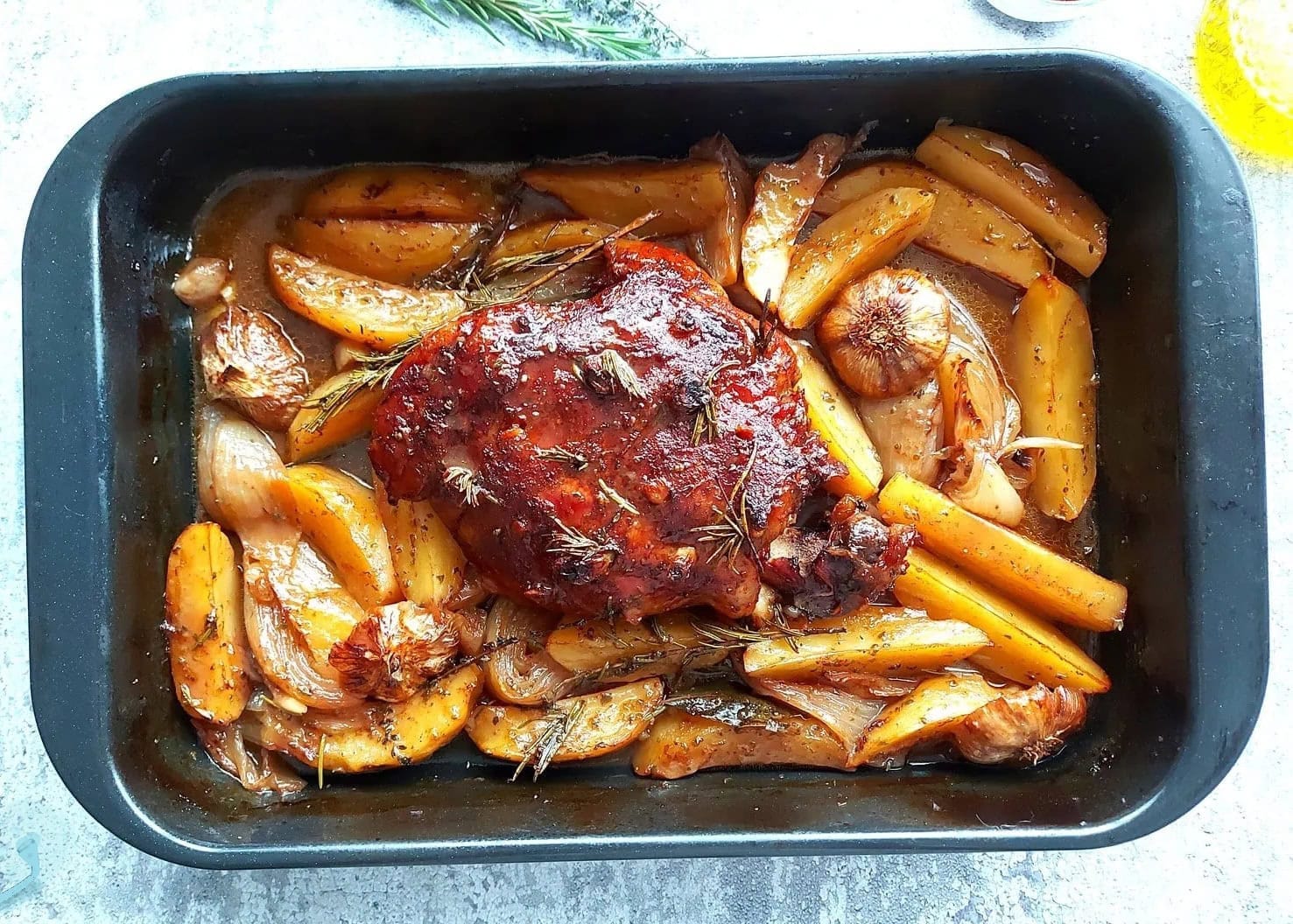
GREEK SLOW ROASTED LEG OF LAMB
Part of the Taste of Greece Series
If there’s one recipe that captures the soul of Greek cooking, it’s this Greek Slow Roasted Leg of Lamb. The kind of dish that fills your entire house with the most incredible aroma of garlic and rosemary for hours.
What I absolutely love about this slow roasted Greek lamb is how something so impressive—melt-off-the-bone tender meat is ridiculously simple to make. Yet it’s the kind of dish that turns a regular dinner into something unforgettable.
The secret is low-and-slow cooking. You prepare the leg of lamb and let it roast for hours in a broth so fragrant that it makes your neighbors text you asking what you’re cooking. And those pan juices? Absolute liquid gold. Deeply lemony, garlicky, and so good you’ll want to spoon them over everything on your plate.
This is the recipe I reach for every Easter Sunday, every special occasion, or whenever I want to put something truly memorable on the table without spending the whole day stressed in the kitchen. Pair it with a cool, garlicky Tzatziki Sauce, and you have a meal that tastes like a sun-drenched afternoon in Greece. Make it once, and I promise — it earns a permanent place in your recipe rotation.
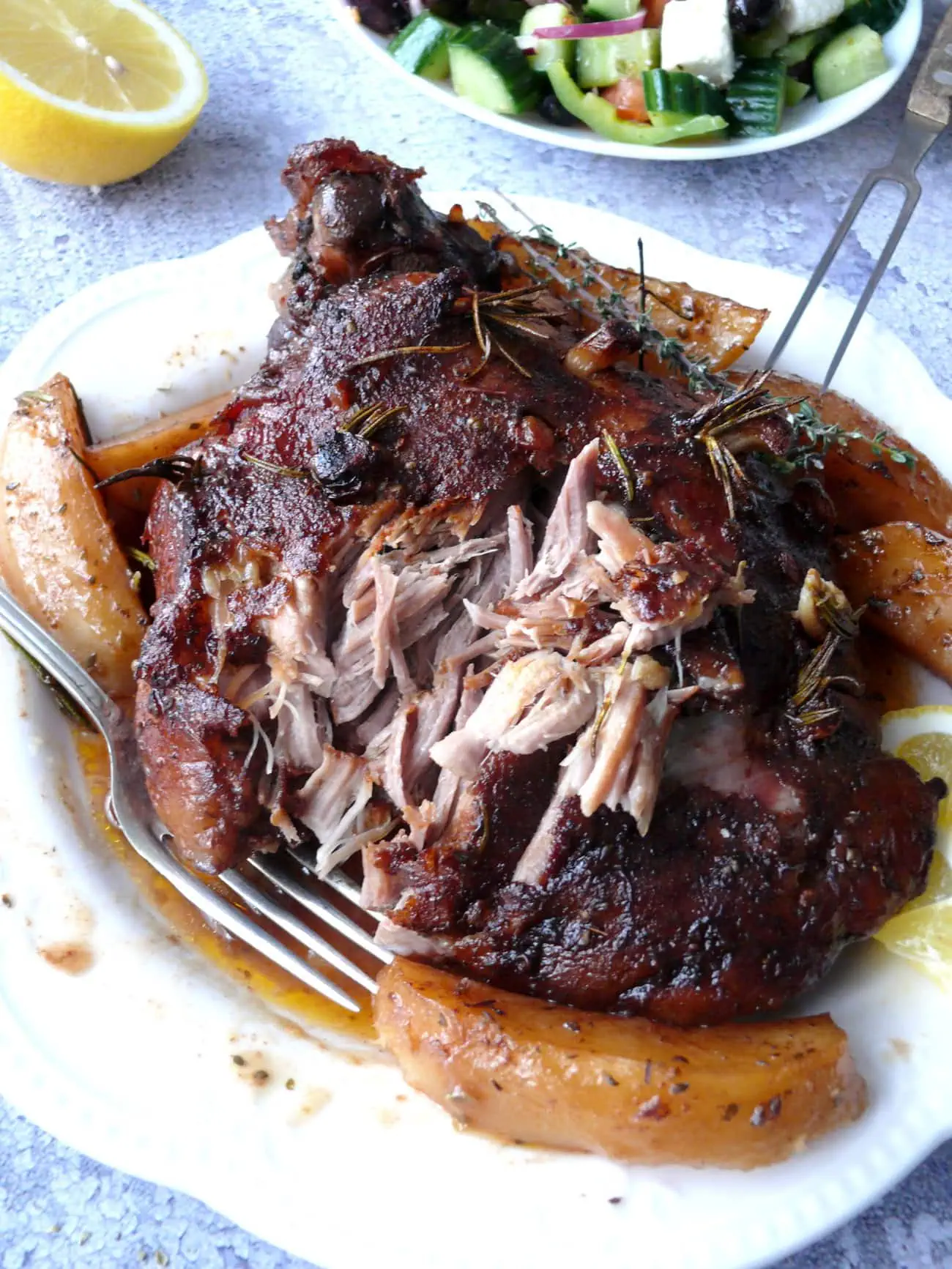
This Greek Slow Roasted Leg of Lamb Is Perfect For
Easter Sunday — The crown jewel of the Greek Easter table. Traditionally eaten after the midnight service, this dish carries generations of meaning and memory in every bite.
Sunday roast — Elevate your weekend ritual with something truly spectacular.
Christmas or holiday entertaining — A showstopper centrepiece that feeds a crowd with minimal effort.
Any time you want to make someone feel utterly loved — Because food is love, and this dish says it loudly.
History and Heart of This Greek Slow Roasted Leg of Lamb
Greek slow roast lamb is so much more than a recipe — it’s a centerpiece of Easter, and family gatherings. For centuries, whole lambs have been spit-roasted over open flames in villages across Greece, slowly basted with lemon and herbs until the skin turns golden and the meat becomes impossibly tender. It’s a ritual as much as it is a meal.
In Greece, this dish is the undisputed star of Pascha (Πάσχα — Greek Orthodox Easter), where lamb symbolises renewal and the joy of gathering together after a long winter. But you don’t need a holiday to justify making it. Any time you want to feed the people you love something deeply memorable, this is your move.
The recipe has travelled through generations. What never changes is the method: generous amounts of garlic, sharp lemon juice, woodsy rosemary and oregano, good olive oil, and low-and-slow roasting. It’s rustic, deeply aromatic, and wonderfully forgiving if you’re new to roasting large cuts of meat.
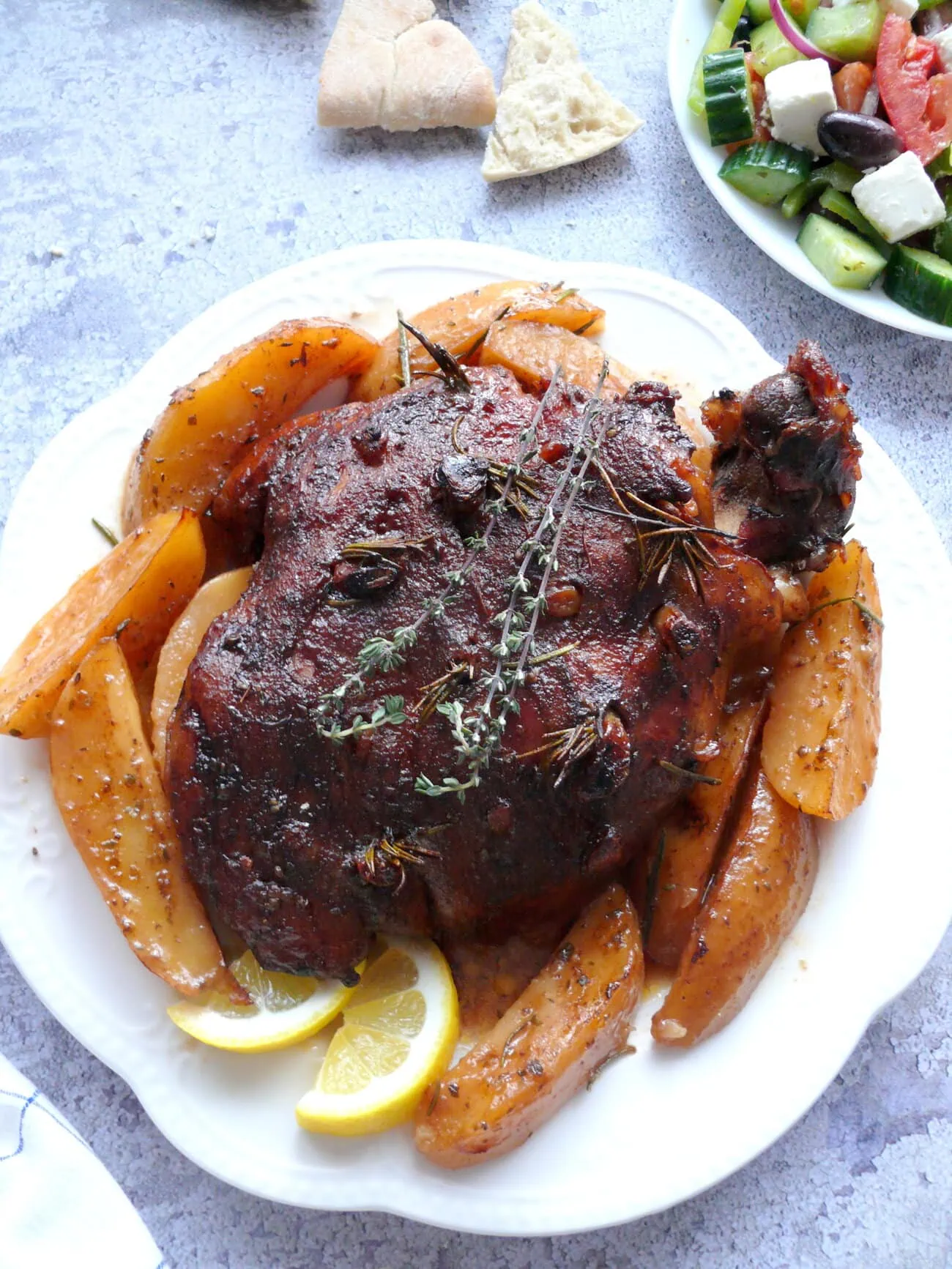
Why You’ll Absolutely Love This Recipe
Let me be honest with you — this is not a quick weeknight dinner. But it IS a recipe that earns a standing ovation at the dinner table every single time.
Here’s why this Greek Slow Roasted Leg of Lamb is genuinely special:
It’s forgiving — Unlike a traditional pink roast, where a few extra minutes can ruin everything, this slow-roasted method is almost impossible to overcook. The low-and-slow heat does all the hard work for you.
Fall-apart tender — After hours of slow roasting, the meat becomes so incredibly tender it practically melts off the bone.
The flavour is extraordinary — Garlic tucked deep into the meat, rosemary and thyme perfuming every bite, a splash of lemon cutting through the richness — this is Mediterranean cooking at its very finest.
Most of the work is hands-off — You prep it, pop it in the oven, and the oven does the rest of the work for you.
Perfect centerpiece dish — There’s a reason Greek families have been making this dish for centuries. It works. Every single time.
It’s made for sharing — Whether it’s an Easter Sunday feast or a Sunday roast with family, this dish was born to be at the centre of a crowded, happy table.
Bone-In vs. Boneless — Which Should You Choose?
Honestly, it depends on what kind of cook you want to be today!
Bone-in leg of lamb is the classic, traditional choice — and for good reason. The bone conducts heat from the inside out, meaning the meat cooks more evenly and stays juicier throughout. The pan juices that develop around a bone-in leg are deeper and more complex. Not to mention that it makes for a much more dramatic and beautiful presentation when you bring it to the table. This is the one that gets gasps.
Boneless leg of lamb is the practical choice if you need to serve a crowd cleanly and evenly. It’s easier to carve, cooks a little faster, and gives the marinade more surface area to work into the meat. If you go boneless, ask your butcher to butterfly it open, then roll and tie it before roasting for a neat, uniform shape.
My recommendation? Go bone-in. The flavour payoff is absolutely worth it. But if boneless is what you have, rest assured — this recipe works beautifully, either way. Just reduce the cooking time by about 45 minutes (check the table below for cooking times).
Ingredients for This Greek Slow Roasted Leg of Lamb
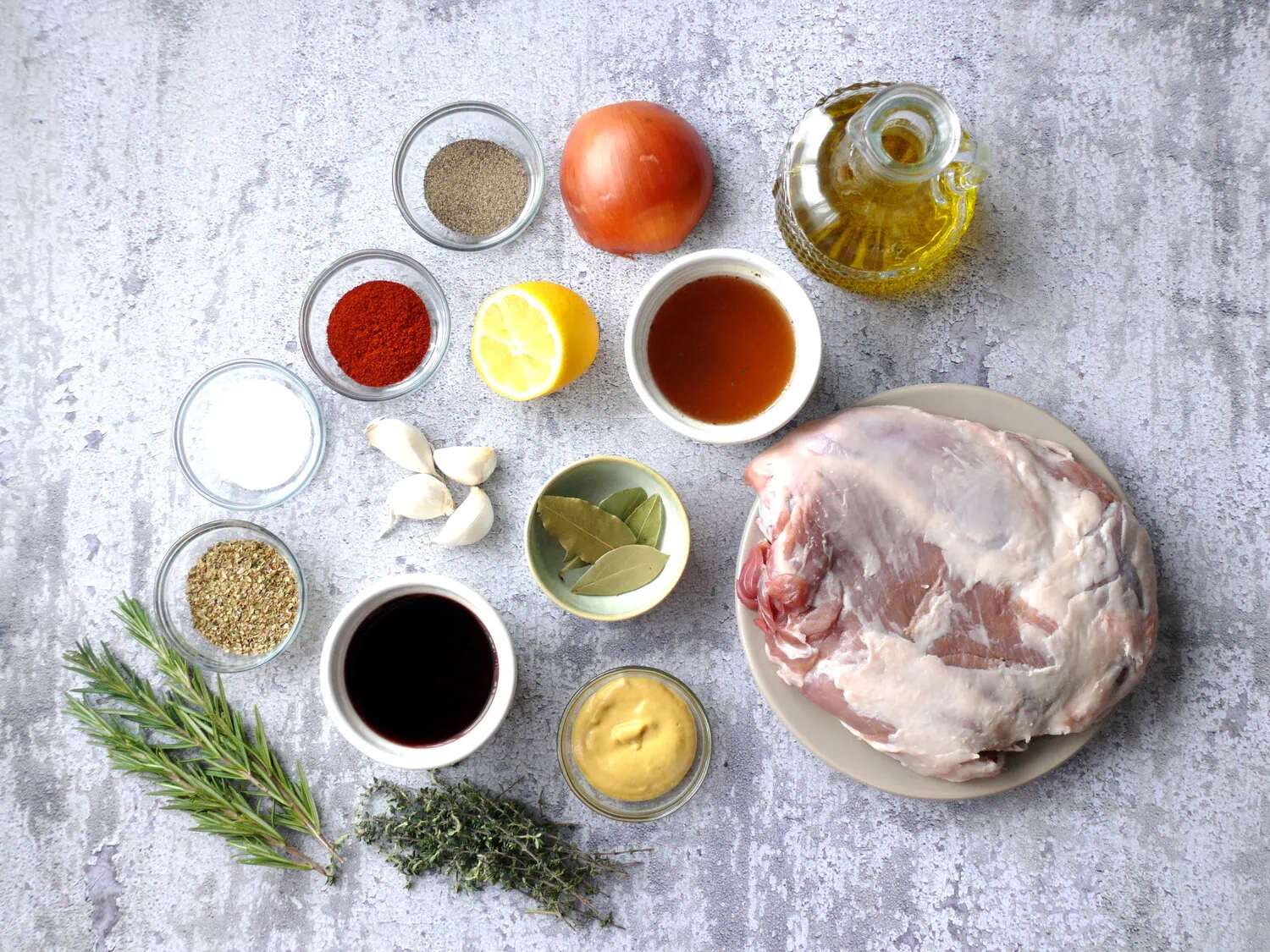
Star of the Show
Leg of lamb — Look for the best quality you can find, ideally from a trusted butcher. Spring lamb (younger, smaller legs) is more tender and milder in flavour, which makes it ideal for this preparation. Ask your butcher to score the flesh in a few places to make marinating easier.
Marinade
Garlic — And lots of it. Don’t be shy. This is the soul of the dish. You’ll be pressing whole cloves directly into the meat, so every single bite carries that sweet, slow-roasted garlic warmth.
Fresh rosemary & thyme — Please use fresh. For a dish this special, fresh rosemary and thyme make a noticeable difference. They bring brightness and a beautiful fragrance that dried herbs simply can’t replicate.
Paprika — Adds a gentle warmth and a beautiful reddish colour to the marinade. Use sweet paprika for a milder flavour or smoked paprika if you’d like a slightly deeper, more complex note.
Salt & pepper — Season generously. This is a big piece of meat, and it needs confident seasoning.
Olive oil — A good quality olive oil is a non-negotiable here. It helps the herbs and seasoning adhere to the meat and adds its own layer of Mediterranean flavour.
Braising Liquid
Beef broth — The backbone of your braising liquid and the base of that incredible gravy. Use a good quality broth for the best flavour.
Red wine — Adds richness, depth, and a beautiful complexity to the braising liquid that you simply can’t replicate with anything else. Use something you’d actually enjoy drinking — nothing fancy, just decent. A good Malbec or Syrah works wonderfully here.
Mustard — The secret weapon. It adds a gentle tang, helps emulsify the braising liquid, and gives the gravy a wonderful depth of flavour.
Dried oregano — A quintessentially Greek ingredient that adds depth to both the lamb and the pan juices.
Lemon — Freshly squeezed, always. The acidity cuts through the richness of the lamb beautifully and keeps things bright and vibrant.
Equipment You’ll Need
Large, deep roasting baking dish or Dutch oven — big enough to hold your leg of lamb comfortably with a little room around the sides for the potatoes and braising liquid.
Small bowl — for mixing your marinade or braising liquid before pouring it around the lamb.
Aluminum foil — essential for sealing the tin tightly during the slow roasting phase. A good seal means all that steam and flavour stays locked in with the meat.
Baking paper (parchment paper) — place it directly over the lamb before sealing with foil. It prevents the meat from drying out and helps keep all that moisture locked in beautifully.
Sharp knife — for making the deep incisions into the lamb where you’ll tuck in the garlic slivers and rosemary.
Meat thermometer (optional but handy) — if you want to take the guesswork out of doneness, an instant-read thermometer is a great tool. For fall-off-the-bone Greek-style lamb, you’re looking for around 85–90°C / 185–195°F.
10 Secrets to the Most Tender Greek Slow Roast Lamb
These insider tips will make your slow roasted leg of lamb recipe foolproof and absolutely unforgettable:
Starting Right
Use bone-in lamb if you can — The bone is actually a flavour powerhouse. As the lamb slow roasts, it conducts heat from the inside out, releasing a depth of richness into the meat and pan juices that a boneless leg simply cannot replicate. If your butcher gives you the choice, always choose bone-in
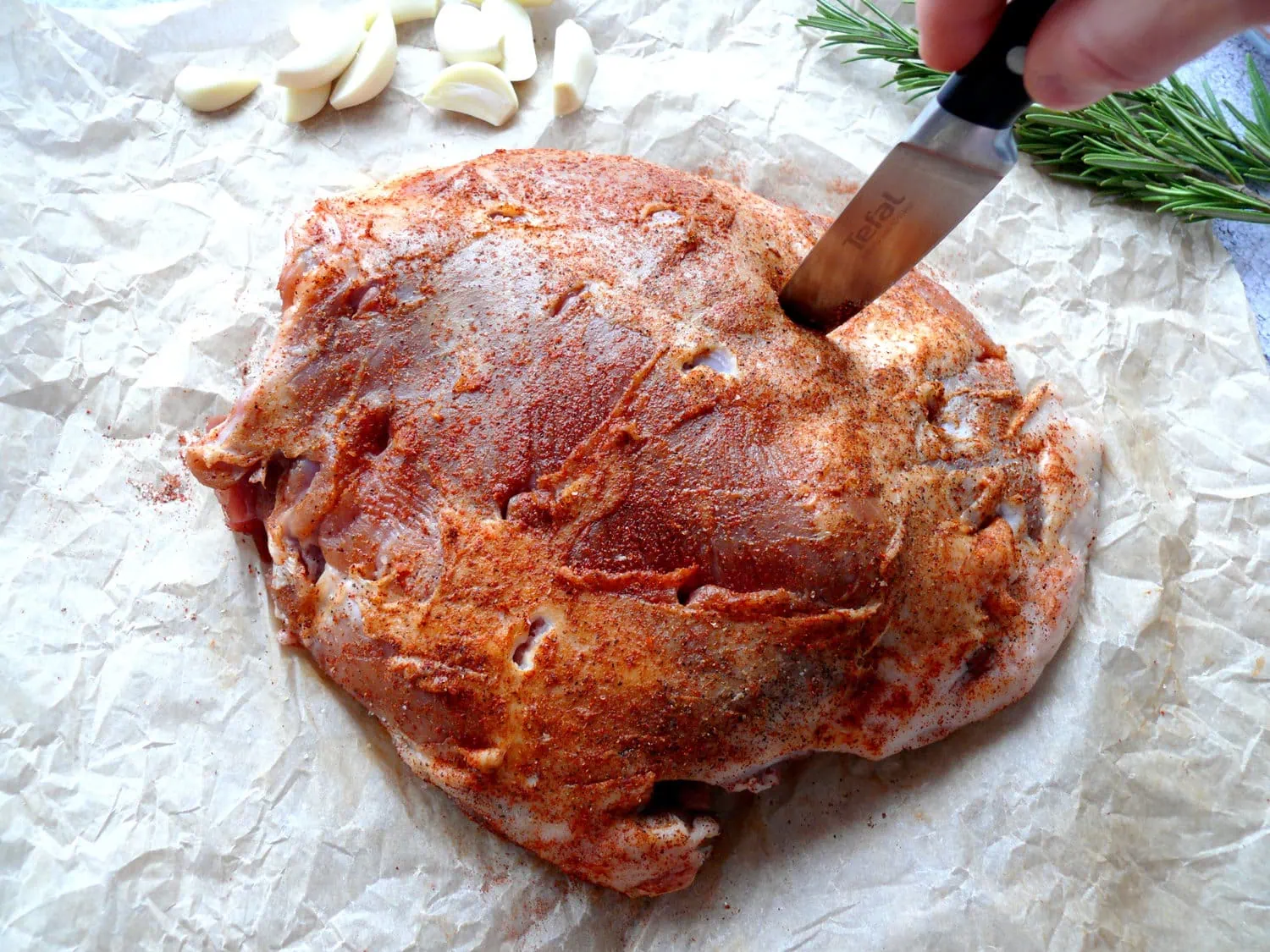
Score the meat deeply — Shallow incisions mean the garlic and herbs sit on the surface. Deep incisions mean the garlic and rosemary infuse the flavor from the inside out.
Marinate overnight if you can — The garlic and rosemary will penetrate much further into the meat, and the flavour difference is remarkable. A quick 30-minute marinade works, but overnight is where the magic lives.
During Roasting
Low and slow is non-negotiable — and always roast covered first. Resist the urge to crank up the heat to speed things along. Roasting at 340°F (170°C), tightly covered, is the sweet spot — the trapped steam breaks down the tough connective tissue into fall-apart tenderness while keeping every drop of moisture locked in. Remove the cover only at the end for that glorious golden crust. Patience is the secret ingredient here.
Always build a veggie bed — Never place your lamb directly on the roasting tin. The bed of veggies catches every single drop of those precious drippings, while also lifting the lamb so it cooks evenly on all sides.
Keep it tightly covered — The whole point of the slow-roasting method is to braise the meat in its own steam and the liquid below. If the foil is loose or the seal is imperfect, you’ll lose moisture, and the meat can dry out. Seal it well.
Don’t drown it in liquid — You want the liquid to come about 1 inch (2-3 cm) up the sides of the roasting tin — enough to create steam and a sauce, but not so much that you’re boiling the lamb rather than roasting it.
Don’t skip the red wine — The wine gently steams, tenderising the meat from below, and then gradually evaporates, leaving behind a deeply concentrated, complex flavour in your pan juices.
The Finishing Touches
Baste once the foil comes off — Spoon those gorgeous pan juices over the lamb every 10 minutes. Each baste builds another layer of that deeply golden, caramelised crust that makes this dish so visually stunning and so incredibly delicious.
Rest, rest, rest — Rest the lamb for 20-30 full minutes — cutting early releases all the juices.
How to Make Greek Slow Roasted Leg of Lamb — Step by Step
(To make this recipe as easy as possible, I’ve included step-by-step photos. For the exact measurements, full printable recipe, and details, see the recipe card at the end of this post.)
Step 1 – Prepare & Marinate the Lamb
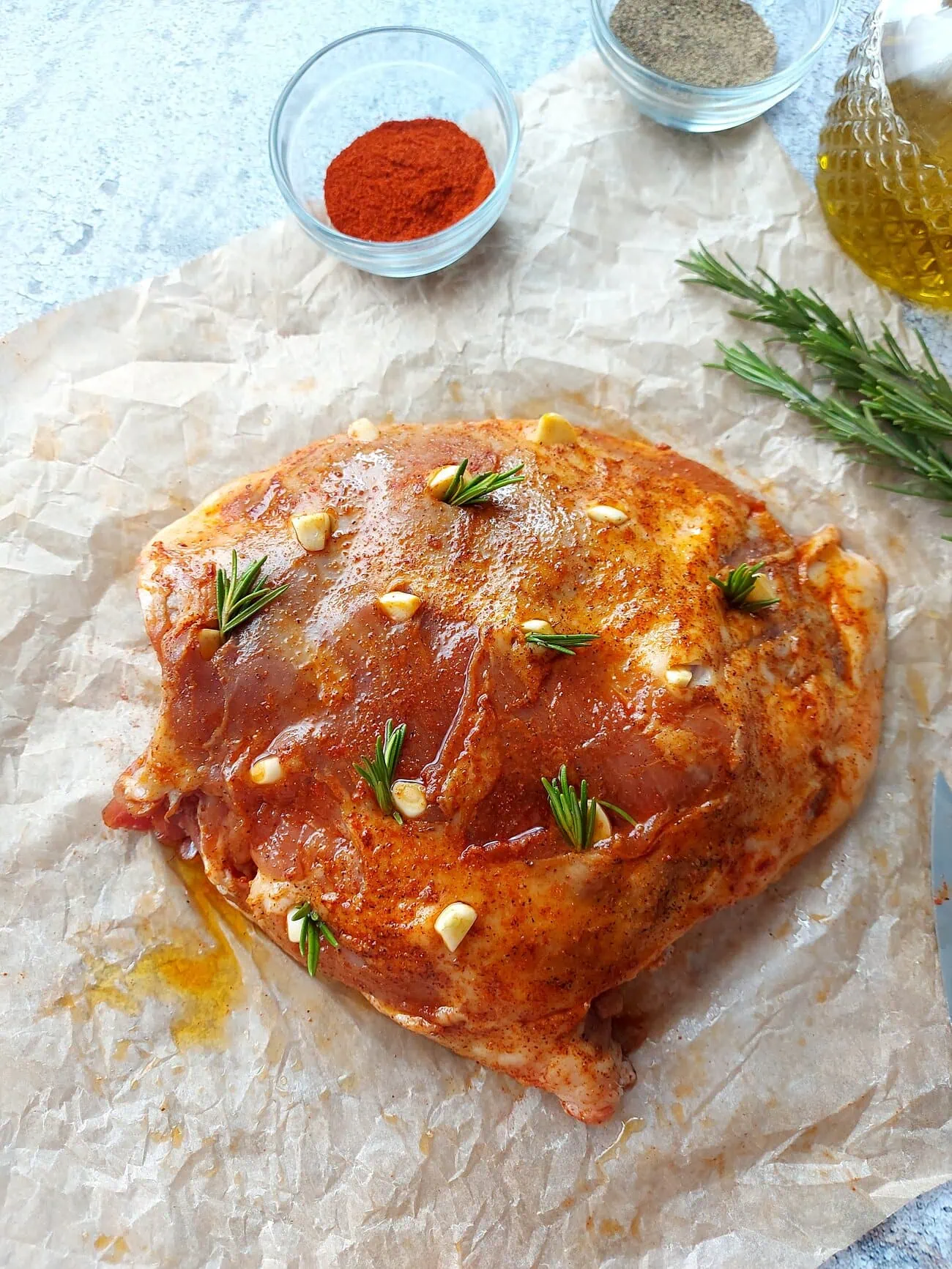
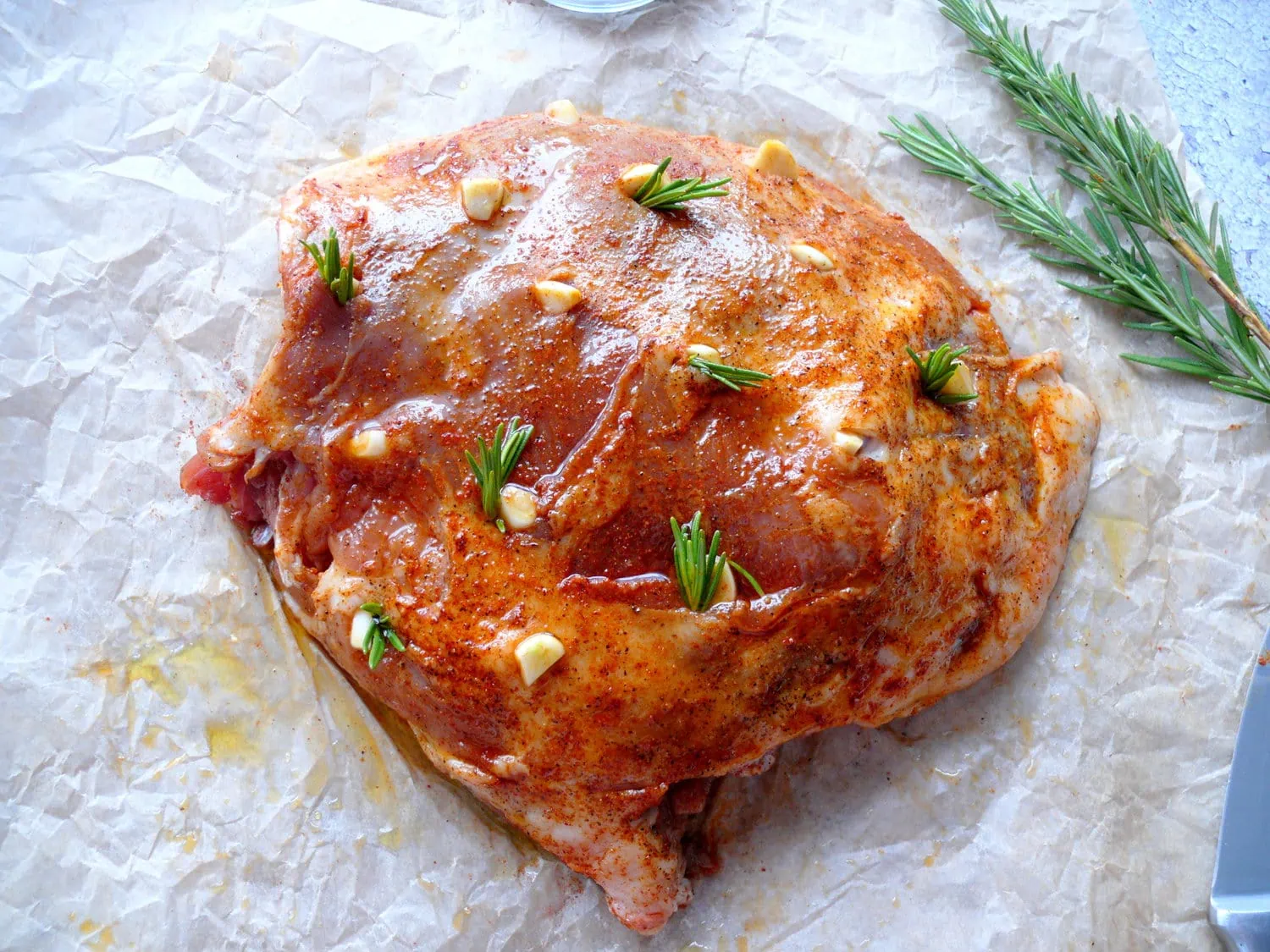
Rub the leg of lamb all over with salt, pepper, and paprika. Make deep incisions all over the lamb and tuck in garlic clove slivers and small rosemary sprigs. Drizzle with olive oil, and let marinate in the fridge overnight, or at least 3–4 hours. The longer, the better.
Step 2 – Make the Braising Liquid
Take your leg of lamb out of the fridge at least an hour before cooking — bringing it to room temperature ensures more even cooking throughout.
While your lamb is coming to room temperature, prepare the braising liquid by whisking together the red wine, beef broth, yellow mustard, lemon juice, and oregano.
Step 3 – Prepare the Pan
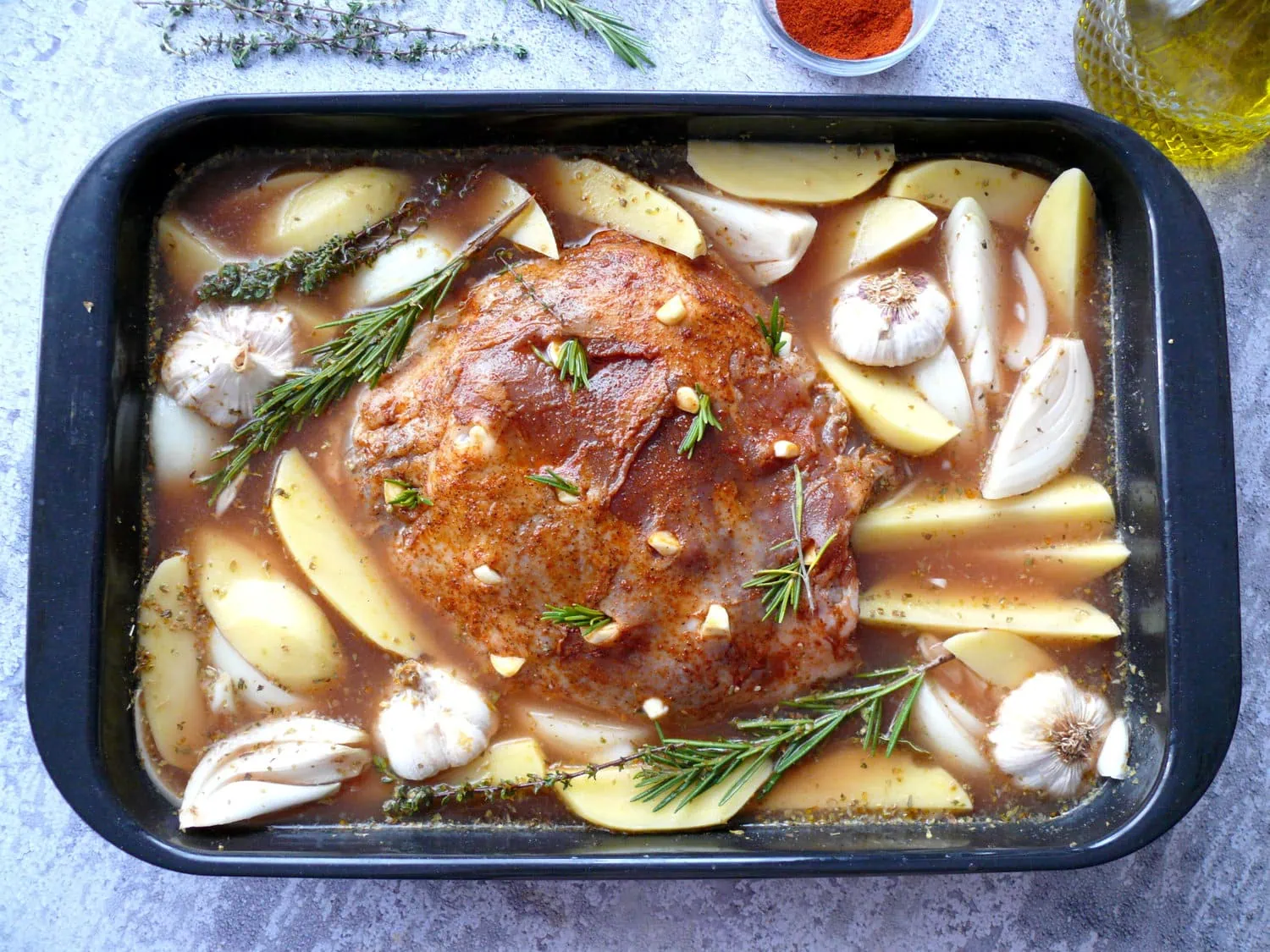
In a deep roasting pan, add the potatoes, onions, and halved garlic heads, place the lamb on top, and tuck in the fresh rosemary and thyme sprigs and bay leaves among the vegetables. Pour the braising liquid over the potatoes and vegetables — not over the lamb itself. This fragrant liquid will slowly bubble away underneath the meat throughout the cooking process, keeping everything moist while the potatoes soak up every last drop of flavour.
Step 4 – Cover & Seal the Pan Tightly
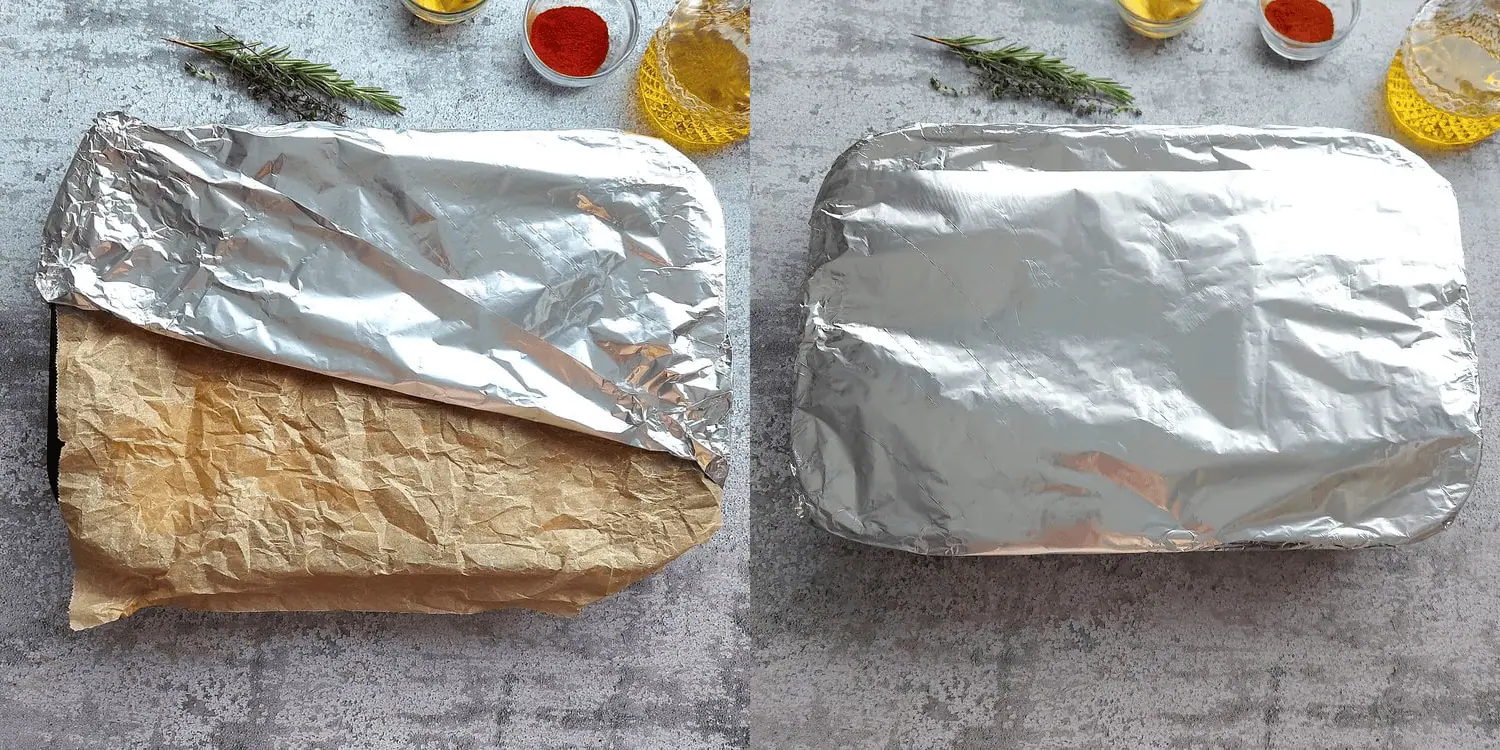
Cover the roasting tin with a layer of baking paper directly over the lamb, then wrap the entire tin tightly with aluminium foil, pressing firmly around the edges to create a tight seal. This double layer is the secret to incredibly moist, juicy meat — the steam stays trapped inside, the pan juices don’t evaporate, and every last drop of flavour stays exactly where it belongs. Don’t skimp on the sealing — the tighter, the better!
Step 5 – Low & Slow Roasting
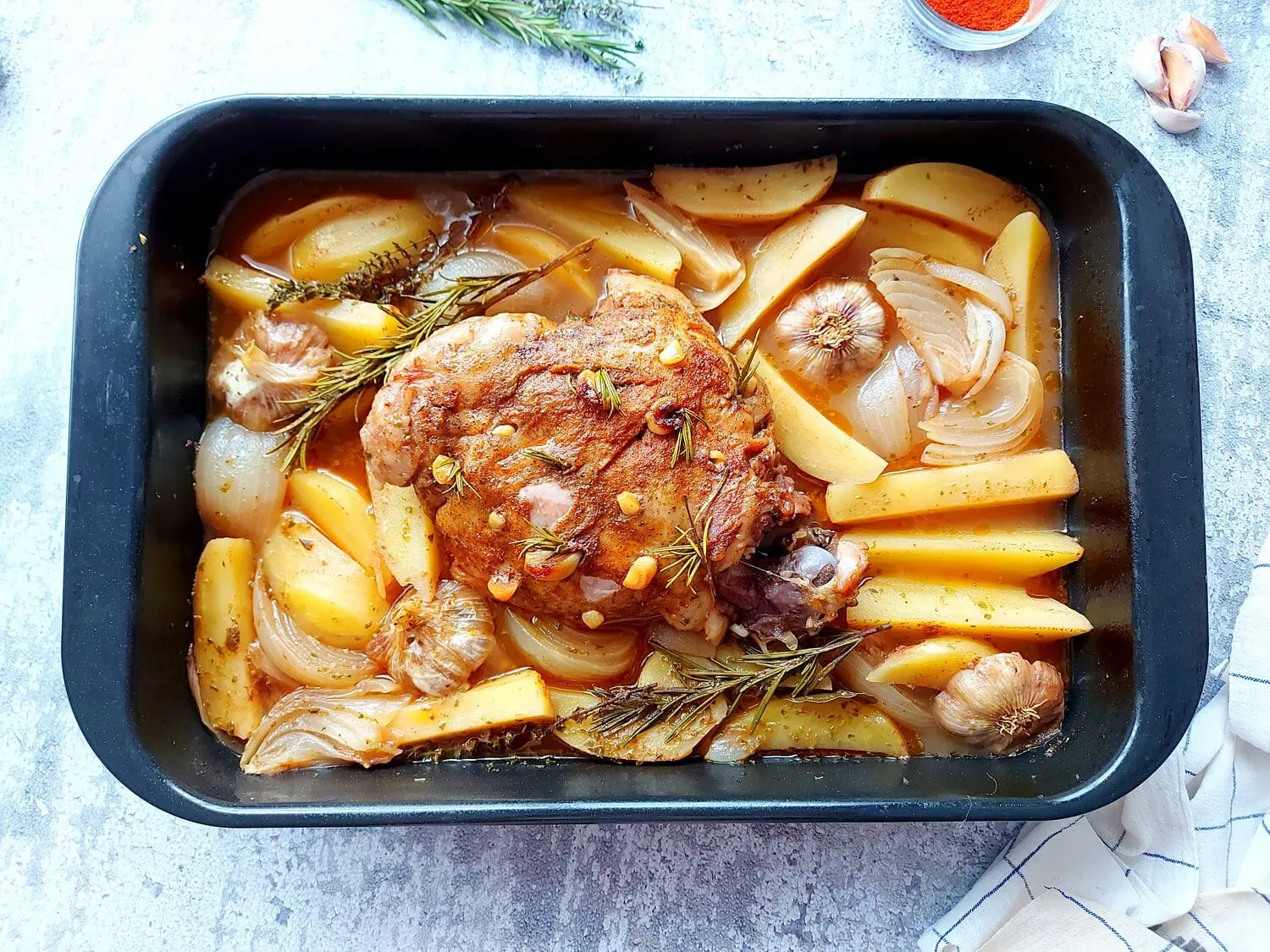
Roast at 340°F (170°C) for 2 hours 45 minutes. Do not open the foil or the steam will escape and the pan juices will evaporate. Start checking after 2 and a half hours. The lamb is ready when the meat pulls away from the bone effortlessly, and a fork slides in with zero resistance.
Step 6: Uncover & Build That Golden Crust
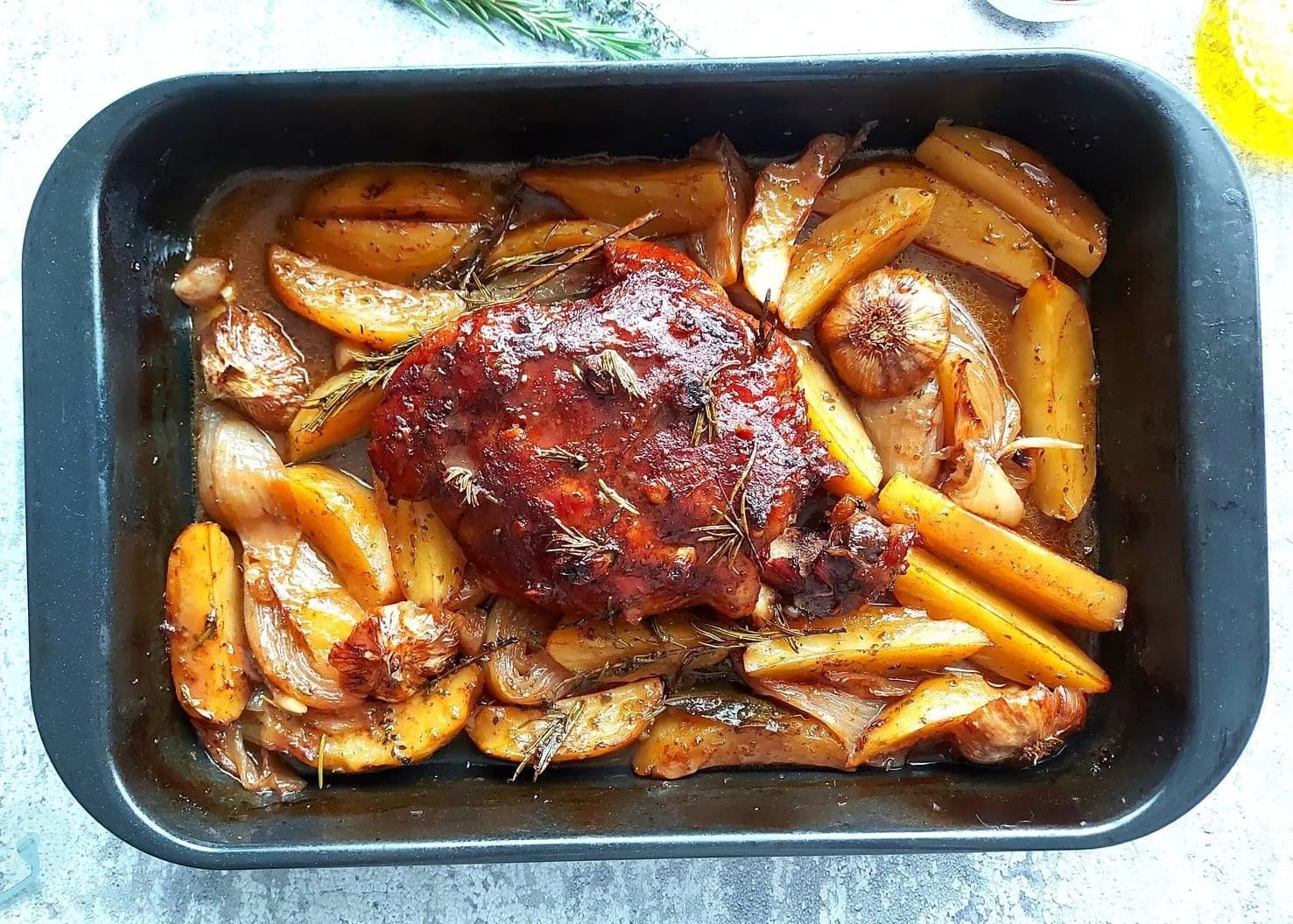
Once your 2 hours 45 minutes are up, remove the foil and baking paper and crank the oven up to 410–430°F (210–220°C). Roast uncovered for a further 20–25 minutes to develop that gorgeous, irresistible crust. Every 10 minutes, baste the lamb generously with the pan juices. This will build that glossy, caramelised layer on the outside — each baste adding more colour, more flavour, and more of that irresistible crust.
Step 7 – Rest the Lamb
Once you’ve achieved that beautiful golden crust, rest the lamb for at least 20–30 minutes, loosely tented with foil. This allows the juices to redistribute back through the meat. While the lamb is resting, prepare the gravy.
Step 8 – Make the Gravy
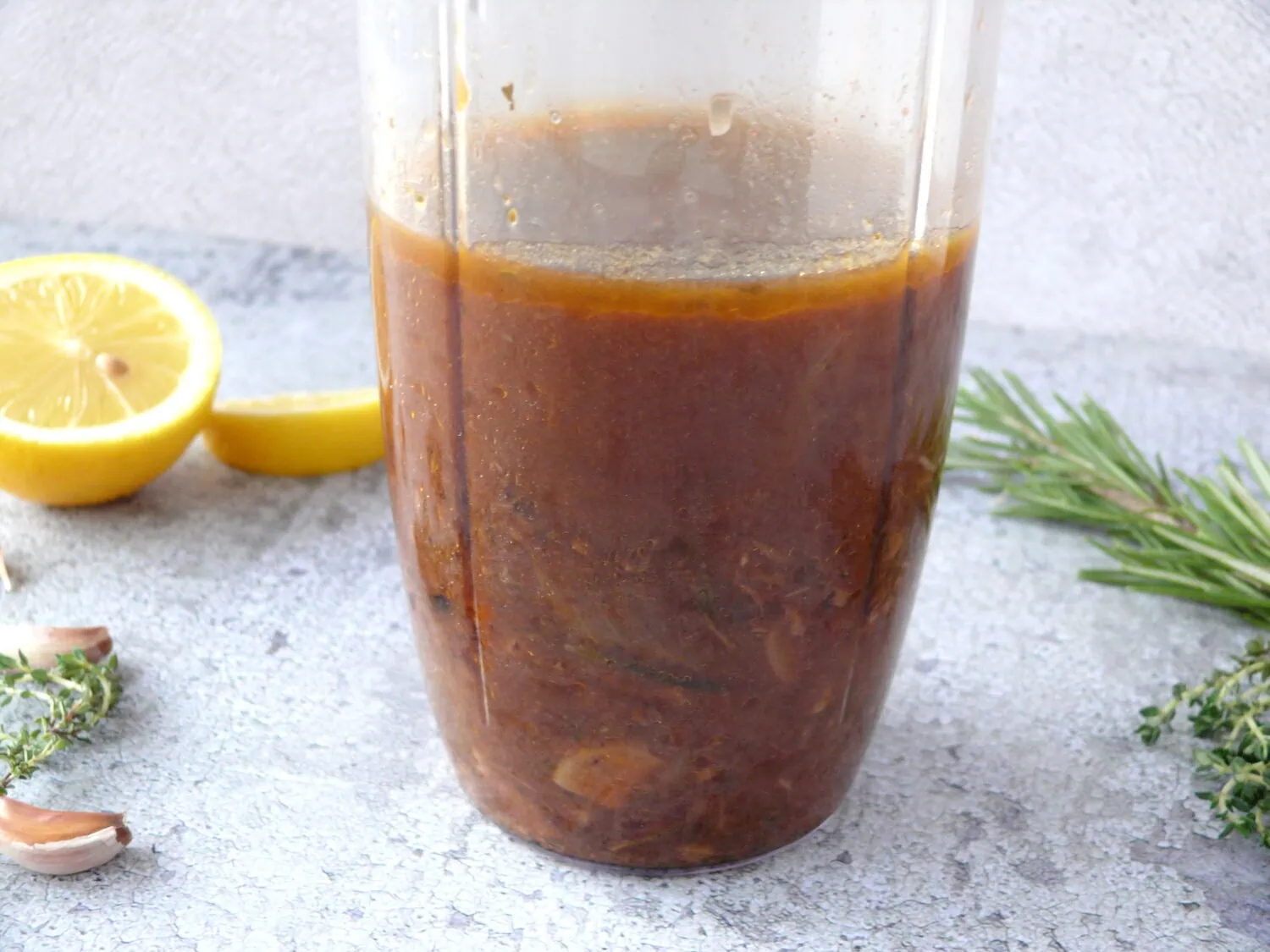
Remove the rosemary and thyme sprigs and bay leaves from the pan, and transfer the potatoes to a serving platter. Squeeze the halved garlic heads into the pan juices. Pour all the pan juices into a blender and let sit for 5-10 minutes until the fat settles on top. Skim off as much fat as you can, then blend everything together until smooth. Taste and adjust the seasoning with a little salt, pepper, or lemon juice, if needed. If you prefer a finer, more elegant sauce, pass it through a fine mesh strainer, but you can serve it as is — this rustic version is just as beautiful and full of flavor.
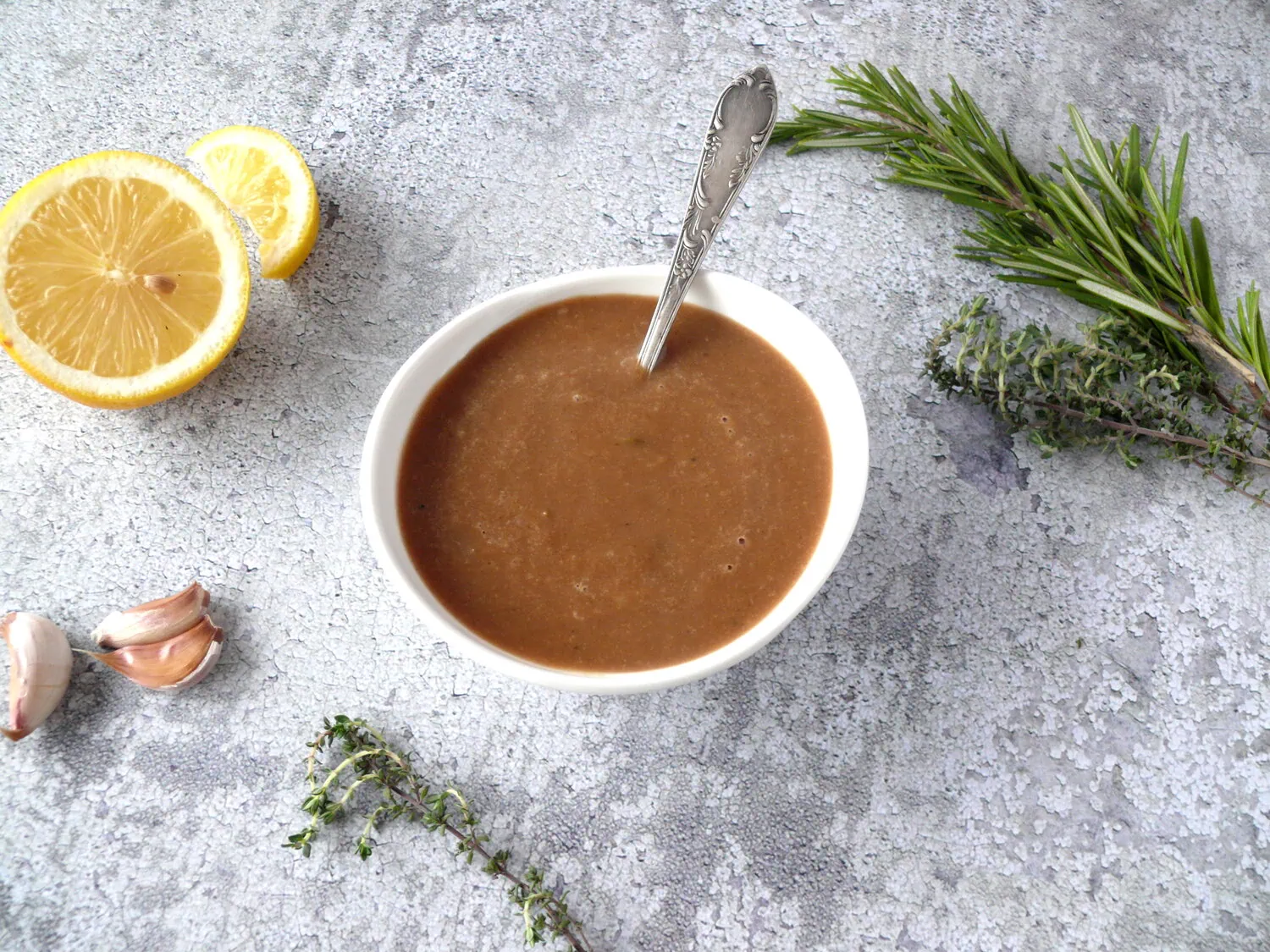
Step 9 – Serve & Enjoy
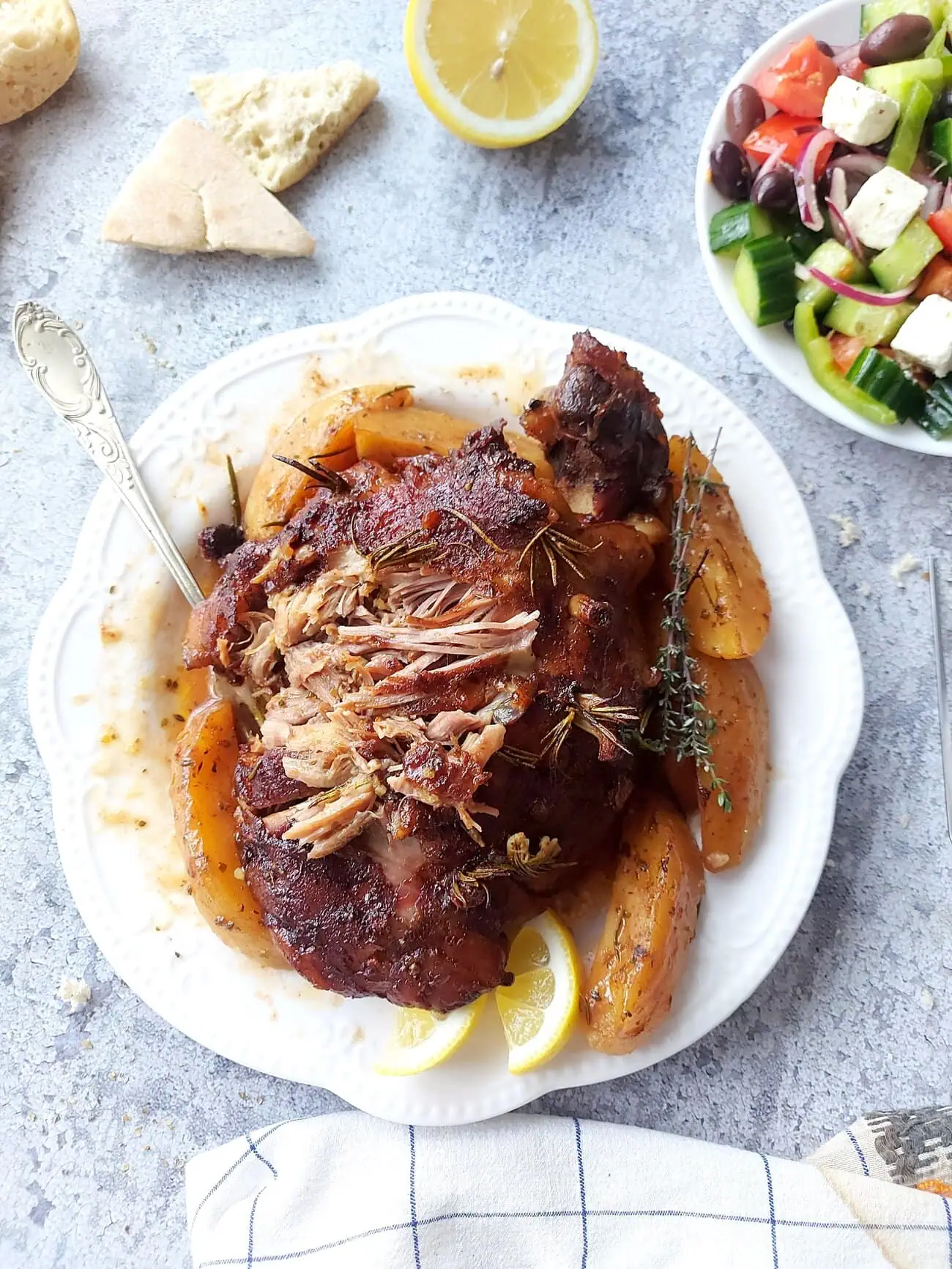
Arrange the herb-roasted potatoes on a large warm serving platter and place the lamb on top. Serve the gravy in a warm jug on the side. Enjoy!
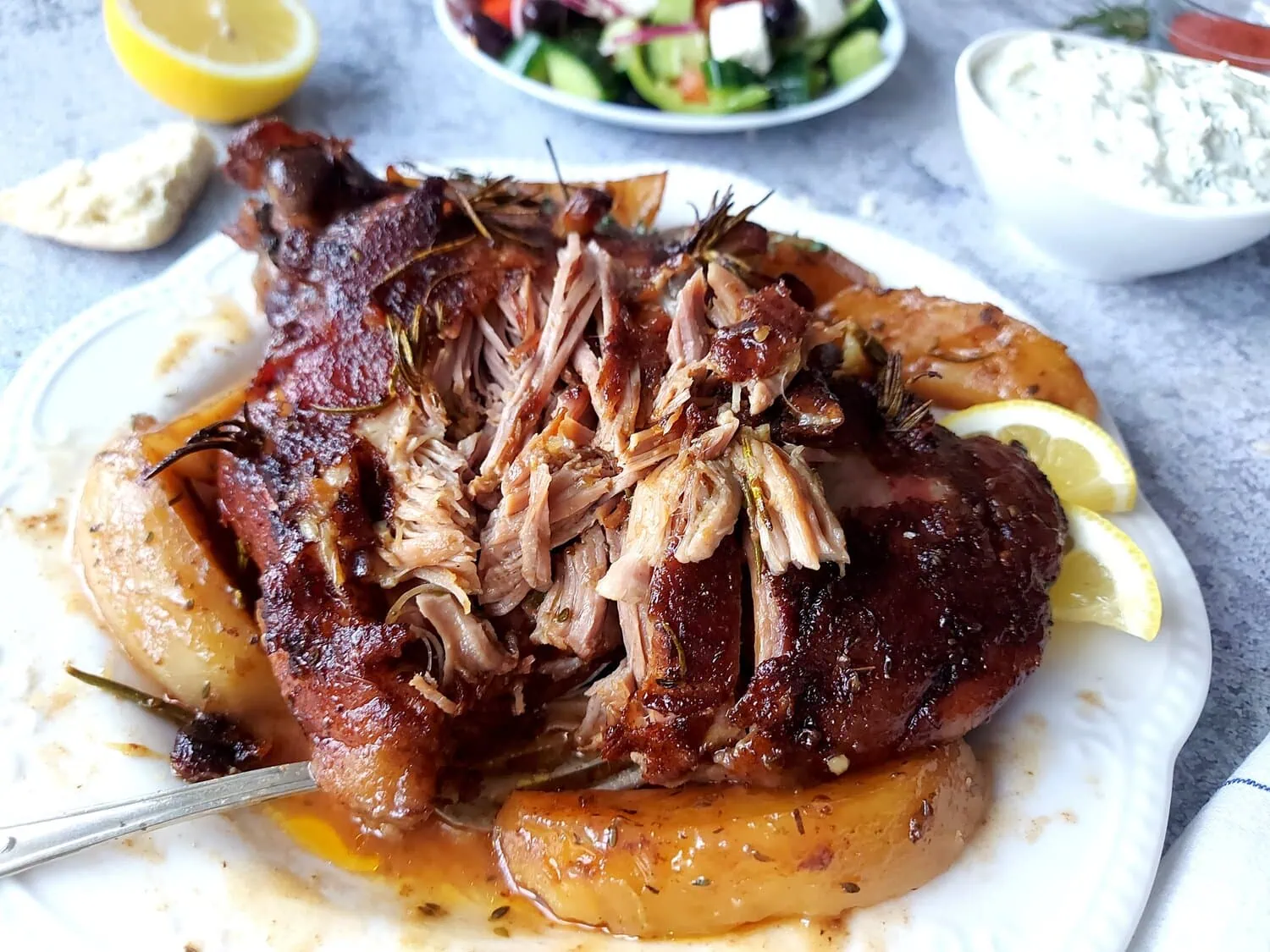
How Long to Cook a Leg of Lamb
Use this as your guide, always adjusting for your specific oven:
| Weight | Low & Slow (170°C / 340°F) covered | Final Uncovered (210–220°C / 410–430°F) |
|---|---|---|
| 1 kg / 2.2 lbs | 2 hrs 30 min | 20–25 minutes |
| 1.15 kg / 2.5 lbs | 2 hrs 45 min | 20–25 minutes |
| 1.5 kg / 3.3 lbs | 3 hrs 15 min | 20–25 minutes |
| 2 kg / 4.4 lbs | 3 hrs 45 min | 20–25 minutes |
| 2.5 kg / 5.5 lbs | 4 hrs 15 min | 20–25 minutes |
| 3 kg / 6.6 lbs | 4 hrs 45 min | 20–25 minutes |
The ultimate test: Insert a fork into the thickest part of the meat. If it slides in and the meat pulls apart easily, you’re done. If there’s any resistance at all, give it another 30 minutes and check again.
For those who prefer a meat thermometer: for that fall-off-the-bone Greek-style texture, you’re looking for an internal temperature of around 185–195°F (85–90°C). Well done is traditional and intentional here — this is not a pink roast.
Bone-In vs. Boneless — Cooking Time Differences
If you’re going boneless, the cooking times are approximately 45 minutes shorter than bone-in across all weights, which is the standard rule of thumb. The Final Uncovered time stays the same since that’s purely about the crust.
| Weight | Low & Slow (170°C / 340°F) covered | Final Uncovered (210–220°C / 410–430°F) |
|---|---|---|
| 1 kg / 2.2 lbs | 1 hr 45 min | 20–25 minutes |
| 1.15 kg / 2.5 lbs | 2 hrs 00 min | 20–25 minutes |
| 1.5 kg / 3.3 lbs | 2 hrs 30 min | 20–25 minutes |
| 2 kg / 4.4 lbs | 3 hrs 00 min | 20–25 minutes |
| 2.5 kg / 5.5 lbs | 3 hrs 30 min | 20–25 minutes |
| 3 kg / 6.6 lbs | 4 hrs 00 min | 20–25 minutes |
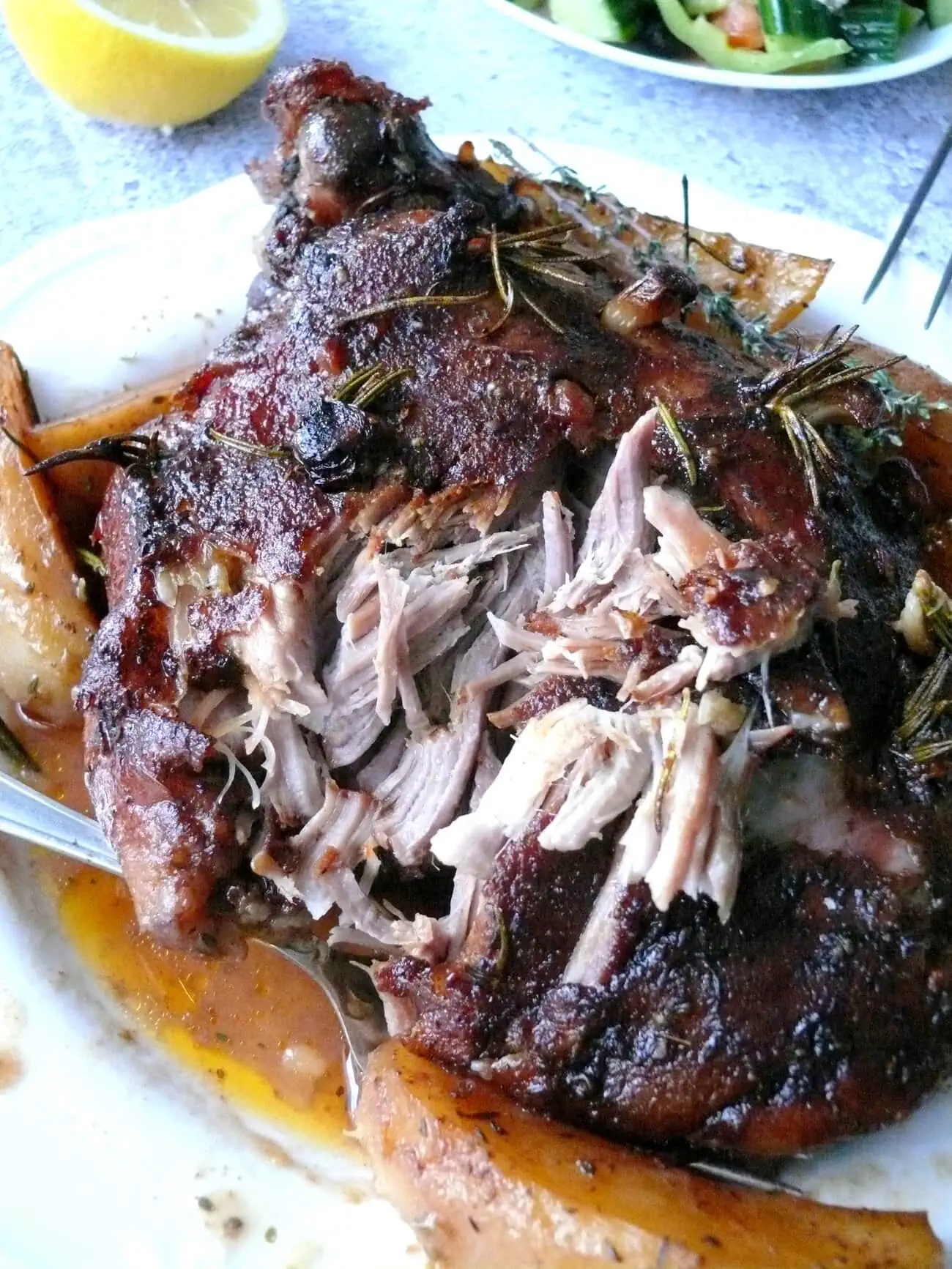
What to Serve with This Greek Slow Roasted Leg of Lamb
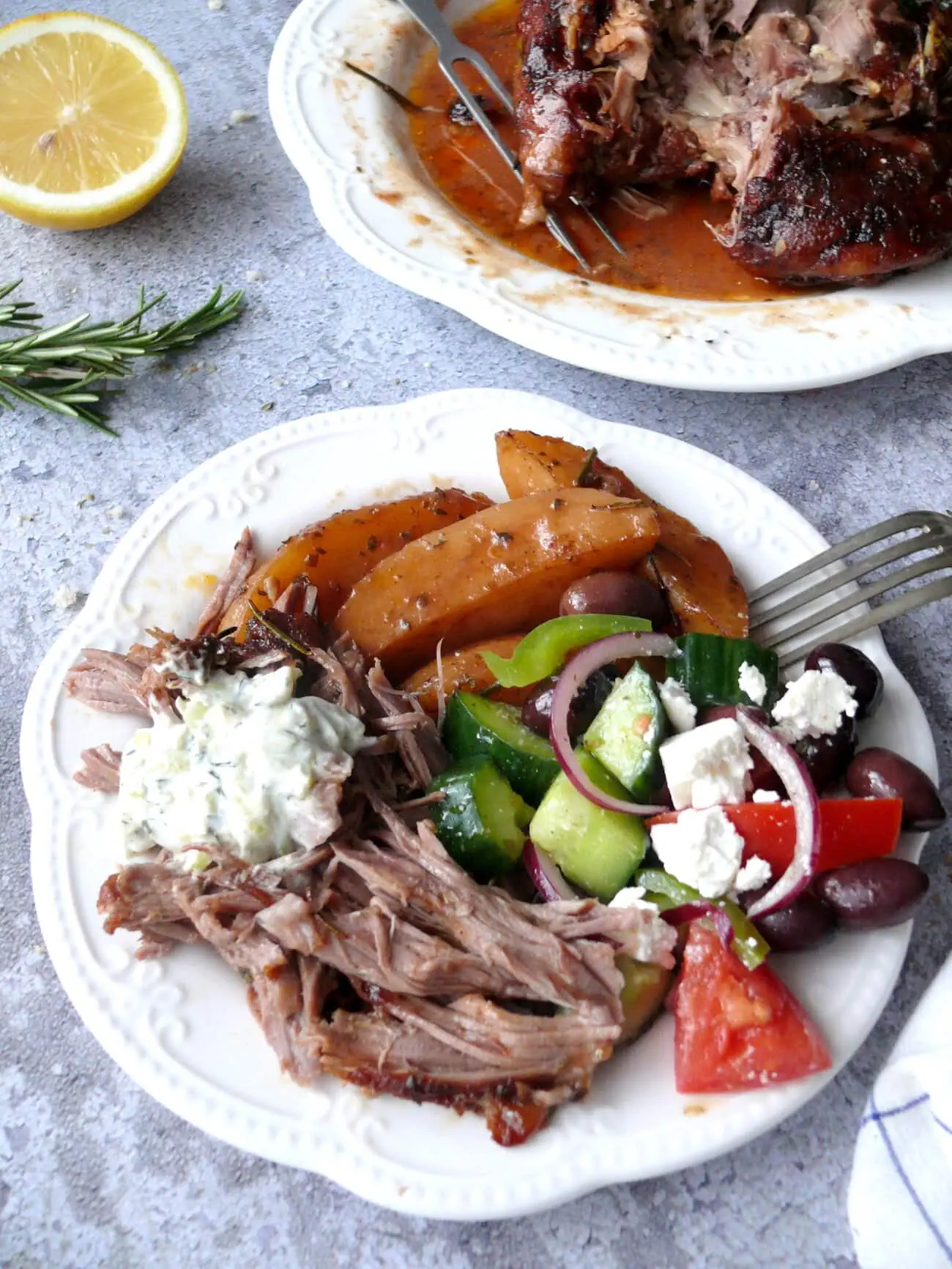
This slow roast Greek lamb is meant to be shared, so serve it family-style, straight to the table on a big, beautiful platter piled high with those golden pan-roasted potatoes. And no Greek lamb feast is complete without a generous bowl of cool, creamy tzatziki sauce on the side for dolloping — make it the day before for the best flavour.
This lamb also pairs beautifully with these crispy, fluffy, and absolutely irresistible roast potatoes with rosemary and garlic.
For something lighter and fresh, my roasted asparagus with lemon adds a beautiful brightness, while the grilled Mediterranean vegetable skewers bring flavor and a gorgeous visual to your table.
You can also add a crisp Greek salad (Horiatiki) for that bright counterbalance to the richness of the meat, or just a simple creamy cucumber and tomato salad.
And finally, plenty of warm fluffy pita or crusty bread to mop up every last drop of that incredible gravy.
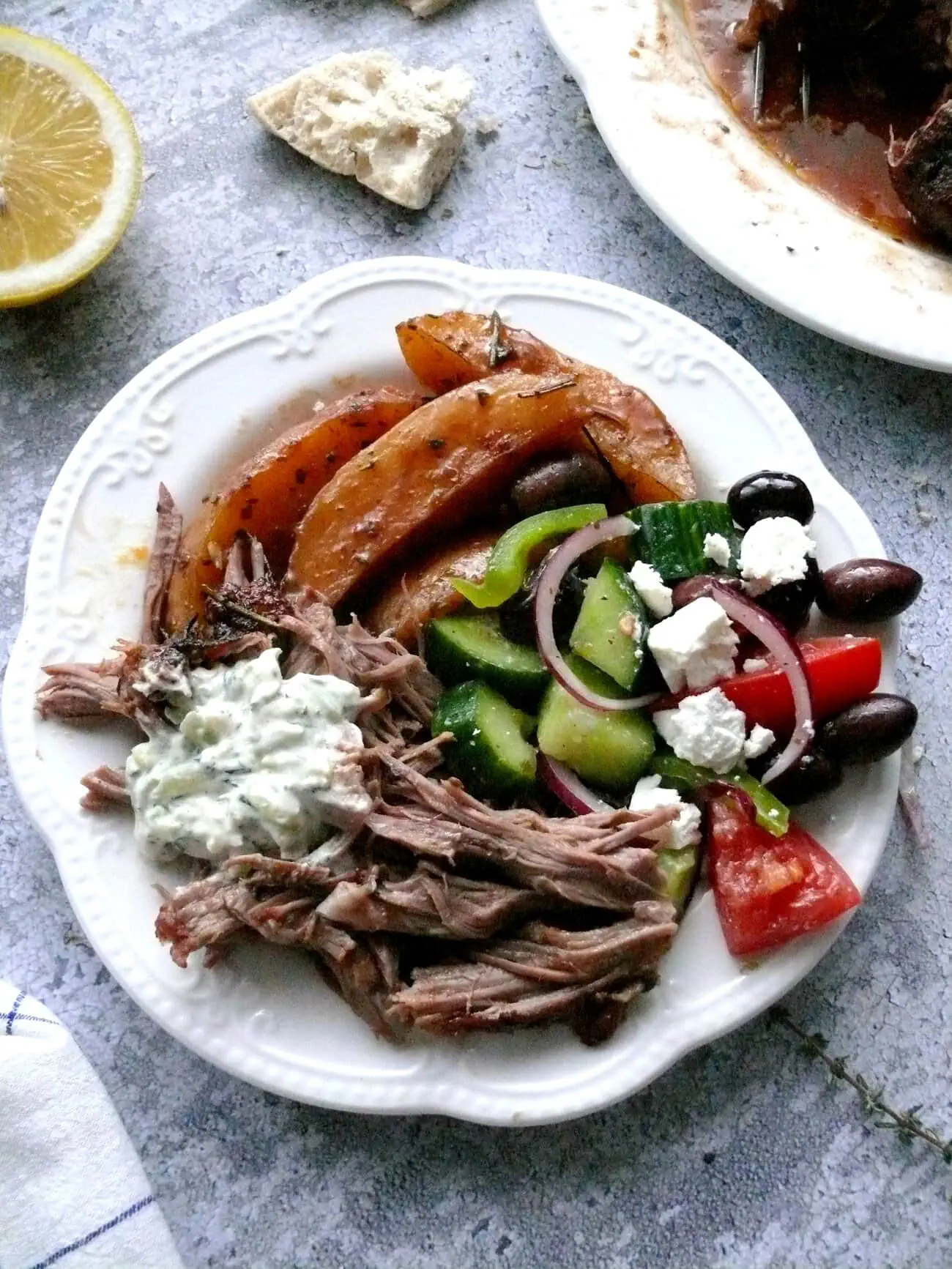
Variations for This Greek Slow Roast Lamb
Here are a few easy ideas to make this Traditional Greek leg of lamb recipe your own:
Make it spicy — If you like a little heat, add a generous pinch of red pepper flakes to your marinade rub. It adds a subtle warmth without overpowering those classic Greek flavours.
Go boneless — If a boneless leg of lamb is what you have, this recipe works just as beautifully. Simply reduce the covered slow-roasting time by 45 minutes (check the table above) and start checking for doneness earlier than you think you need to.
Make it smokier — Swap the sweet paprika in your marinade for smoked paprika for a deeper, smokier flavour profile that feels almost like it was cooked over an open fire.
How to Store and Reheat Leftover Greek Lamb
Leftover lamb is one of life’s great gifts — and this one keeps beautifully.
In the fridge — Store in an airtight container with some of the pan juices for up to 4 days.
In the freezer — Shred the leftover lamb and freeze in portions with the juices for up to 3 months. Defrost overnight in the fridge before reheating.
To reheat — Place lamb in a baking dish with a splash of broth, cover tightly with foil, and warm at 320°F (160°C) for 20–30 minutes, or until heated through.
What to do with leftovers — Shred the lamb and pile it into warm flatbreads with tzatziki and pickled onions for the most incredible next-day lunch. Or toss it through pasta with a little of the pan juices and some crumbled feta. You will not regret it.
What to Do with Leftover Lamb Roast
Leftover slow roast leg of lamb is one of those kitchen gifts that keeps on giving. The flavors deepen overnight, and the tender meat becomes incredibly versatile. Yyou might even find yourself making extra lamb on purpose just to enjoy these next-day favorites.
Here are some delicious ways to turn leftovers into brand-new meals your family will be excited about.
Leftover Lamb Gyros
This is my absolute favourite leftover meal. Shred the lamb and pile it generously into warm pita bread or flatbreads with fresh toppings. Add tzatziki sauce, sliced tomatoes, red onions, lettuce, and a squeeze of lemon. It tastes like the best Greek street food you’ve ever had, made entirely from leftovers!
Lamb Pasta
Toss shredded lamb through your favourite pasta with a little of the leftover gravy, a handful of crumbled feta, and some fresh herbs. It comes together in 15 minutes and tastes like you spent hours on it.
Lamb Soup
Add the leftover lamb and any remaining vegetables to a pot with some stock, a can of tomatoes, and a handful of orzo or rice for a deeply comforting, hearty soup that practically makes itself.
Mediterranean Grain Bowl
Build a quick and nourishing bowl using rice, quinoa, or couscous, roasted vegetables, Feta cheese, olives, and a generous spoonful of tzatziki sauce. It’s fresh, filling, and perfect for meal prep lunches.
Lamb Sandwich or Lamb Toastie
Pile some shredded lamb onto two slices of sourdough, add roasted peppers, a little Feta cheese, a smear of tzatziki (or a drizzle of olive oil), and some fresh herbs. Enjoy as is, or toast lightly until golden and crispy. Lunch doesn’t get better than this.
Hearty Lamb & Vegetable Skillet
Chop leftover lamb into bite-sized pieces and sauté with potatoes, onions, bell peppers, and herbs. It makes a rustic, satisfying dish that works beautifully for dinner—or even brunch.
Protein Boost in Salads
Shred the lamb and add it to Greek salad, mixed greens, or grain salads. It turns a simple salad into something hearty and satisfying.
FAQs
What Is the Best Method for Roasting a Leg of Lamb?
Low and slow is hands down the best method for a truly spectacular leg of lamb. Roasting covered at 340°F (170°C) for several hours breaks down the connective tissue into silky, fall-apart tenderness, then a final blast of high heat at 410–430°F (210–220°C) uncovered builds that gorgeous golden crust. It’s the method that never fails (please check the cooking times chart above).
How Many Hours to Roast a Leg of Lamb?
It depends on the weight, but as a general rule, allow approximately 2.5 to 4.5 hours covered at 340°F (170°C), plus 20–25 minutes uncovered at 410–430°F (210–220°C) for the crust (please check the cooking times chart above). Always use the fork test as your final guide — if the meat pulls apart effortlessly, it’s ready.
Can I Use Boneless Lamb?
Yes, but bone-in delivers deeper flavor and a more complex aroma overall.
Can I Make This Ahead of Time?
Absolutely, and it actually gets better. Cook the lamb fully, let it cool, then refrigerate it in its pan juices. The next day, skim any solidified fat, then reheat covered at 320°F (160°C) for about 45 minutes until warmed through. The flavour will be even deeper.
Do I Need Wine?
Not at all. If you’d rather leave the wine out, simply replace it with extra stock. The lamb will still be wonderful.
How to Cook a 2.5 kg Leg of Lamb?
For a 2.5kg bone-in leg of lamb, roast covered at 340°F (170°C) for approximately 4 hours 15 minutes, then uncover, crank the heat to 410–430°F (210–220°C) and roast for a further 20–25 minutes until deeply golden. Rest for at least 20–30 minutes before serving.
Can I Use Lamb Shoulder Instead?
Yes! Lamb shoulder is actually a wonderful alternative — it has a higher fat content, which makes it even more forgiving during long, slow cooking. Add an extra 1-2 hours to the cooking time, depending on weight. A 4 lb (1.8 kg) bone-in lamb shoulder typically cooks in about 4 – 5 hours, while a 6.5 lb (3 kg) shoulder cooks in 5.5 – 6.5 hours for that fall-off-the-bone texture.
My Lamb Looks Dry — What Happened?
Usually one of two things: the foil wasn’t sealed tightly enough, and the steam escaped, or there wasn’t enough liquid in the bottom of the tin. Both are easy to fix for next time. If your current roast needs rescuing, add a splash of hot stock to the tin, reseal tightly, and give it another 30 minutes.
Can I Cook Two Legs at Once?
Yes, but use separate roasting tins and add an extra 30–45 minutes to the cooking time. They need space to cook evenly.
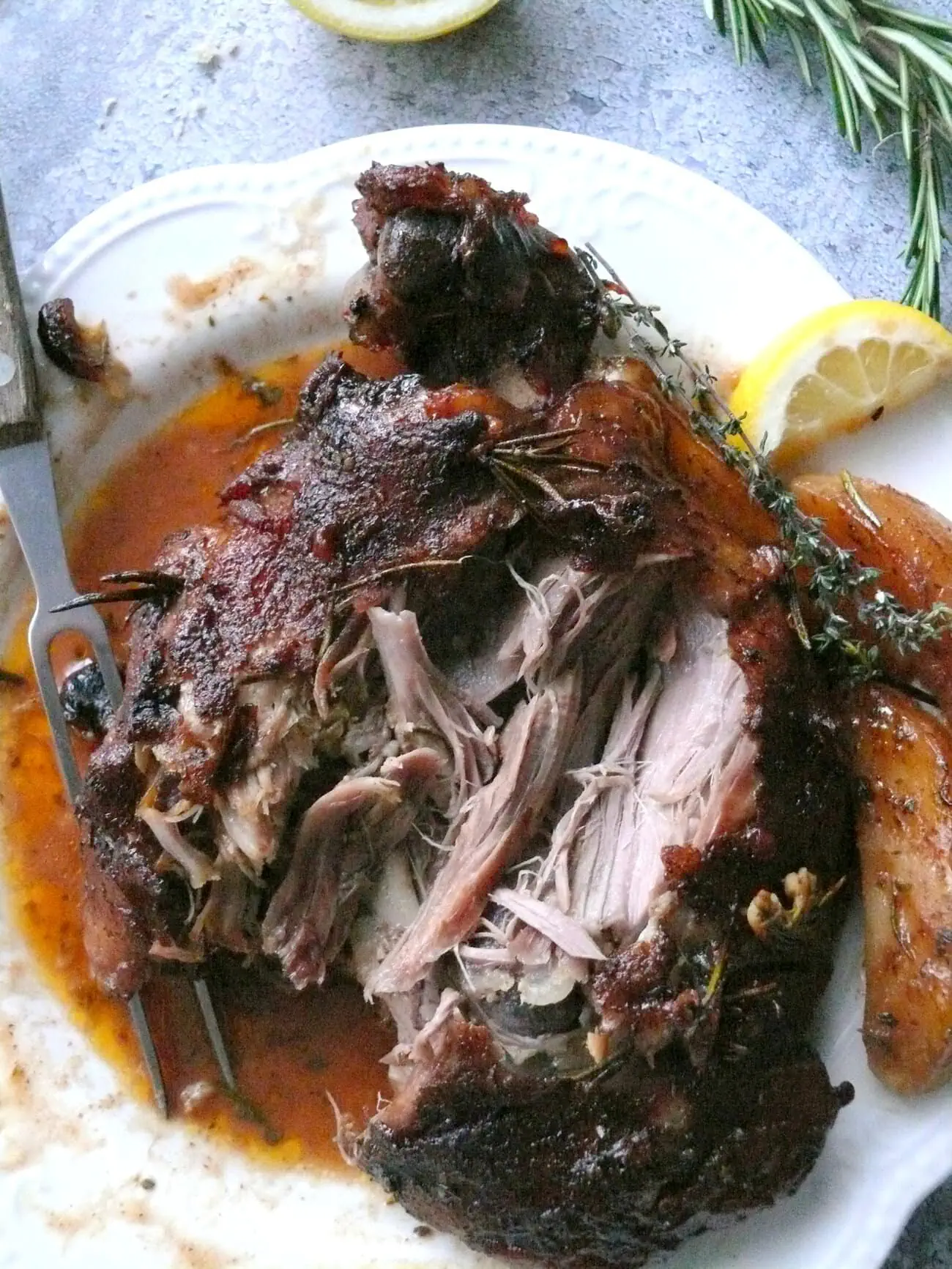
This Greek Slow Roasted Leg of Lamb is the kind of dish that turns an ordinary meal into something truly memorable. Whether you’re preparing it for a relaxed Sunday lunch, a holiday gathering, or a Mediterranean-inspired dinner with family and friends, it’s one of those recipes that brings people together and creates memories.
If this recipe made your table a little more special, be sure to save it for your next Easter Sunday or Sunday roast and let me know how it turned out in the comments — I always love hearing how you made it your own! Reviews are always appreciated, too. Thanks so much for cooking along with me!
Build Your Greek Feast
Complete your meal with more recipes from the Taste of Greece Series.
Taste of Greece Series
- Healthy Tzatziki Sauce Recipe (Easy & Authentic)
- Homemade Greek Salad Recipe in Under 15 Minutes
- Homemade Greek Style Pita Bread (Super Fluffy!)
- Traditional Greek Souvlaki Skewers (Authentic Recipe)
Perfect Side Dishes
- Golden Roast Potatoes with Rosemary and Garlic
- Grilled Mediterranean Vegetable Skewers Recipe
- Roasted Asparagus with Lemon (Ridiculously Easy)
Greek Slow Roasted Leg of Lamb (Fall-Off-the-Bone!)
Ingredients
- 2.5 lb (1.15 kg) leg of lamb (bone in)
- 2 cups beef broth
- 1 cup red wine (dry)
- ¼ cup fresh lemon juice
- 1 TBSP yellow mustard
- 2 medium onions (peeled and quartered)
- 2 garlic heads (unpeeled, halved)
- 3 rosemary sprigs
- 5 thyme sprigs
- 2 bay leaves
- ½ TBSP oregano
- 2 TBSP olive oil
- 4 medium potatoes (cut into wedges)
- 1-2 tsp paprika
- 2 tsp salt
- ½ tsp pepper
Instructions
Prepare & Marinate the Lamb
- Rub the lamb with salt, pepper, and paprika.
- Using a small, sharp knife, make about 15 deep incisions all over the lamb. Cut 7-8 garlic cloves in half and tuck them into each incision, followed by small sprigs of rosemary. Drizzle the lamb generously with olive oil.
- If you have the time, let it marinate in the fridge overnight. Even 3–4 hours will make a real difference. The longer it sits, the deeper the flavor.
Make the Braising Liquid
- Take your leg of lamb out of the fridge at least an hour before cooking — bringing it to room temperature ensures more even cooking throughout.
- Preheat the oven to 340°F (170°C).
- While the lamb is coming to room temperature, prepare the braising liquid. In a small bowl or jug, whisk together the red wine, beef broth, yellow mustard, lemon juice, and oregano until well combined. Set aside.
Prepare the Pan
- Arrange the potatoes, onions, and halved garlic heads (face down) in the bottom of a deep roasting pan. Place the lamb on top, and tuck in the fresh rosemary and thyme sprigs and bay leaves among the vegetables.
- Pour the braising liquid over the potatoes and vegetables — not over the lamb itself.
Cover & Seal the Pan Tightly
- Cover the roasting tin with a layer of baking paper directly over the lamb, then wrap the entire tin tightly with aluminium foil, pressing firmly around the edges to create a proper seal - the tighter, the better. This way, the steam remains trapped inside, the pan juices don't evaporate, and the meat stays incredibly moist and juicy.
Low & Slow Roasting
- Roast at 340°F (170°C) for 2 hours 45 minutes. Do not open the foil or the steam will escape and the pan juices will evaporate.
- Note on timing: Every oven is different, and every piece of meat is different. Start checking after 2 and a half hours. The lamb is ready when the meat pulls away from the bone effortlessly, and a fork slides in with zero resistance.
Uncover & Build That Golden Crust
- Once the 2 hours 45 minutes are up, remove the foil and baking paper and crank the oven up to 410–430°F (210–220°C). Roast uncovered for a further 20–25 minutes until you get that deeply golden-brown caramelised crust. Every 10 minutes, baste the lamb generously with the pan juices to build that glossy, caramelised crust.
Rest the Lamb
- Rest the lamb for at least 20–30 minutes, loosely tented with foil. This allows the juices to redistribute back through the meat. While the lamb is resting, prepare the gravy.
Make the Gravy
- Remove the rosemary and thyme sprigs and bay leaves from the pan and transfer the potatoes to a serving platter.
- Squeeze the halved garlic heads into the pan juices.
- Pour all the pan juices into a blender and let it sit for a couple of minutes until the fat settles on top. Skim off as much fat as you can, then blend everything together until smooth.
- Taste and adjust the seasoning with a little salt, pepper, or lemon juice, if needed. If you prefer a finer, more elegant sauce, pass it through a fine mesh strainer, but you can serve it as is — this rustic version is just as beautiful and full of flavour.
Serve & Enjoy
- Arrange the herb-roasted potatoes on a large warm serving platter and place the lamb on top. Serve the gravy in a warm jug on the side. Enjoy!

Leave a Reply