Are you looking for an eggless scone recipe for a tasty breakfast or an afternoon tea? Or are you craving some fluffy scones but just ran out of eggs? Either way, this easy Eggless Scone Recipe with just a few simple ingredients is your answer!

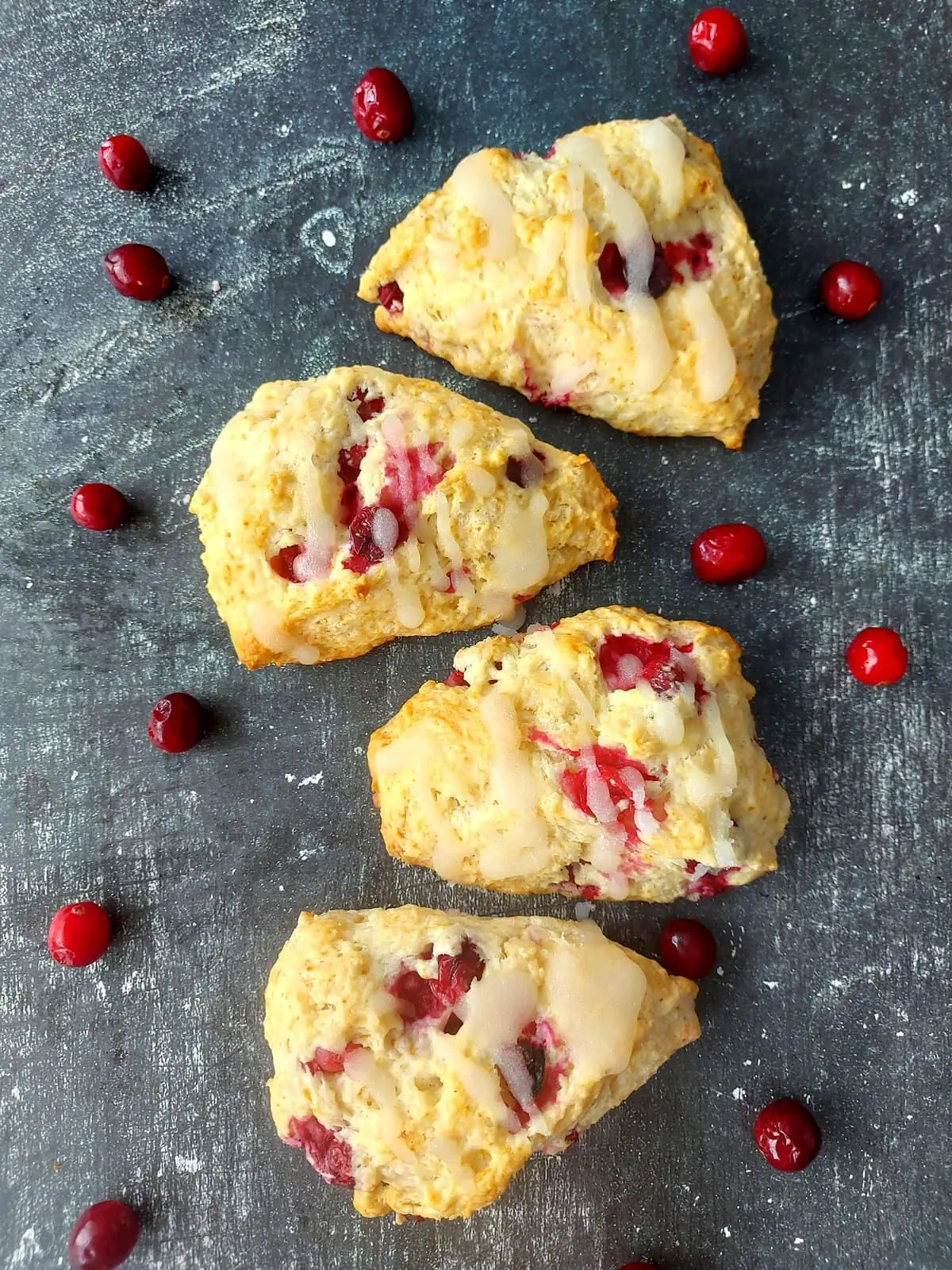
This Eggless Scone Recipe is a slight twist on the classic recipe. The scones are made with juicy cranberries and a tangy lemon glaze, and require only a few ingredients. They are the perfect snack for breakfast or a sweet little treat for afternoon tea, and they always hit the spot.
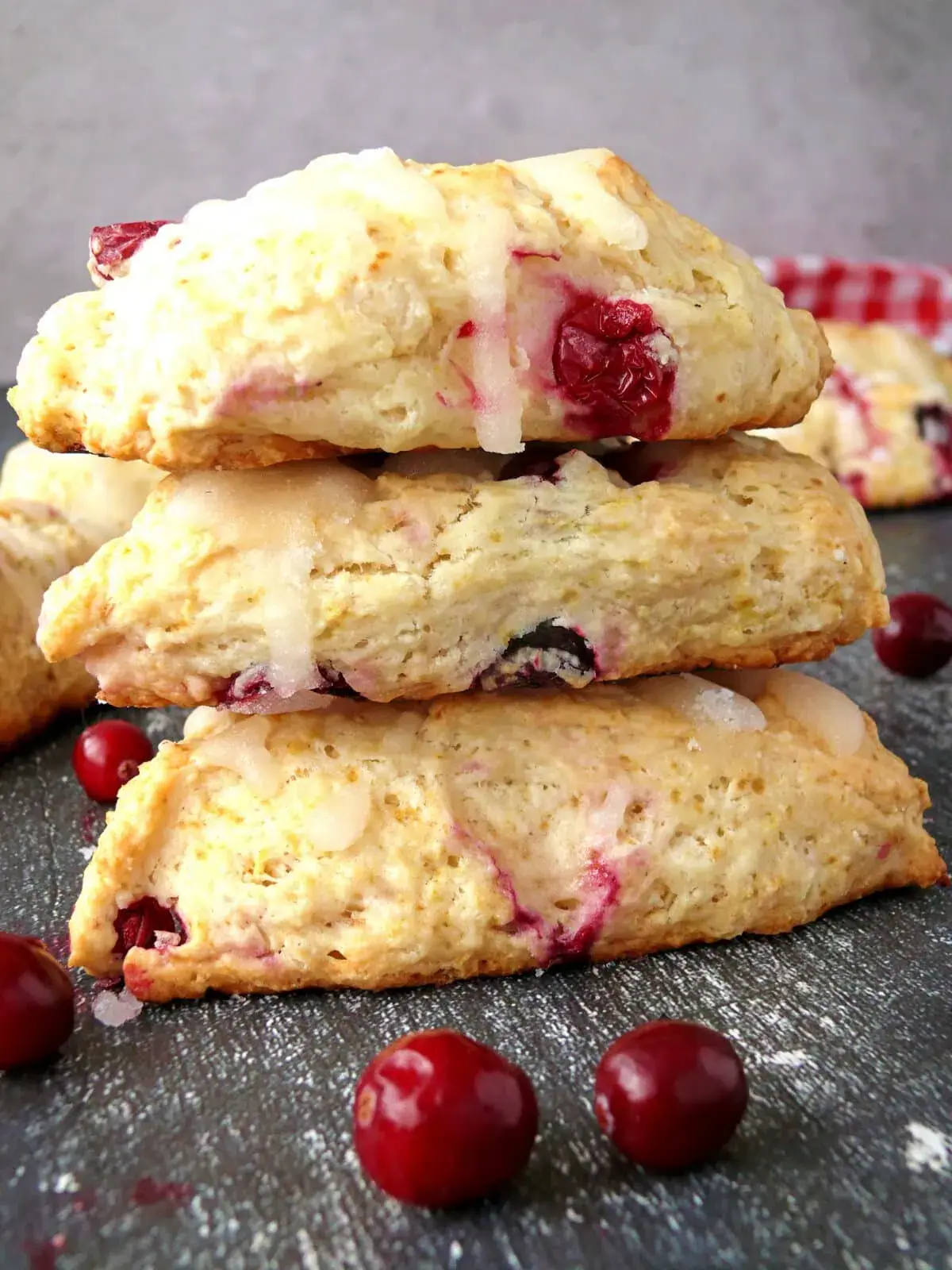
These delicious scones have a golden, lightly crisp exterior, a soft and layered crumb inside, and just enough tartness from fresh cranberries and lemon zest to balance the buttery richness. No egg replacer needed — the buttermilk handles moisture and structure on its own, giving you nice and fluffy scones.
They come together in one bowl in under 10 minutes of hands-on time, which makes them just as practical for a Tuesday morning as for a weekend brunch. You can swap the cranberries for blueberries if you prefer, and the result is equally good — but the cranberry-lemon combination in this version is hard to beat.

Why You’ll Love This Eggless Scone Recipe
No eggs required — these are true scones without eggs, not a workaround. The buttermilk provides all the richness and lift you need.
Truly flaky texture — cold butter, minimal mixing, and a light hand with the dough produce that characteristic layered crumb.
Bright, balanced flavor — fresh cranberries bring tartness, lemon zest adds fragrance, and caster sugar rounds it out.
Freezer-friendly — you can freeze the shaped, unbaked scones and bake straight from frozen whenever you need them.
This Eggless Scone Recipe at a Glance
Ingredients for This Eggless Scone Recipe
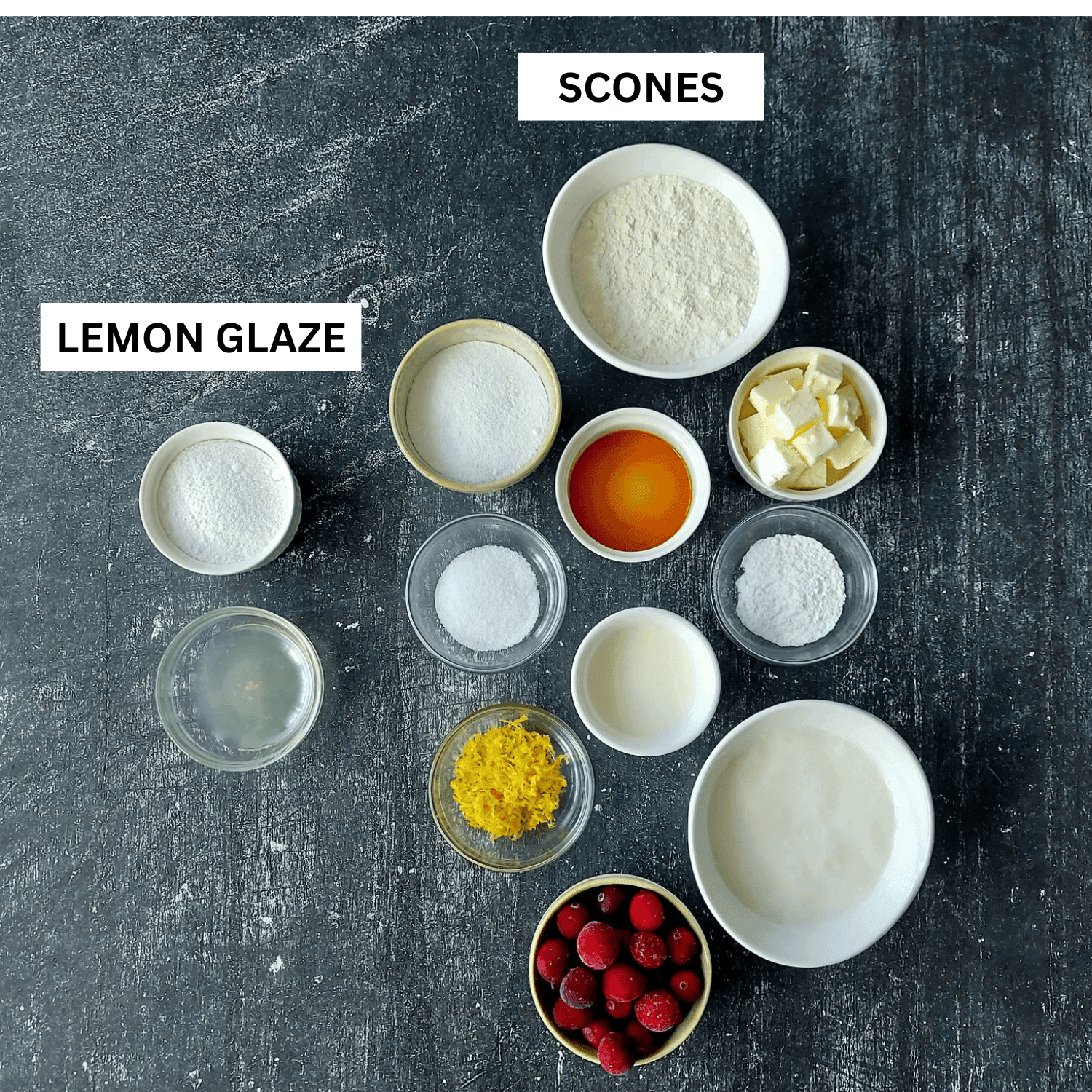
Dry Ingredients
Pastry flour (or all-purpose flour) — pastry flour has a slightly lower protein content than all-purpose, which means a more tender, delicate crumb. All-purpose flour works perfectly as well — the scones will be just a touch more substantial but still soft inside.
Caster sugar — finer than granulated sugar, so it dissolves more evenly into the dough. This keeps the scones lightly sweet without a granular texture. Granulated sugar can be substituted in a pinch.
Baking powder — this is the main leavening agent. Make sure yours isn’t expired — old baking powder is the most common reason scones don’t rise properly.
Salt — sharpens all the other flavors and keeps the sweetness from going flat.
Lemon zest — zest packs far more concentrated citrus flavor than juice, giving every bite a fragrant lemon note.
Wet Ingredients & Add-ins
Cold butter — both salted and unsalted work here. The key is that it’s cold. Cold butter steams as the scones bake, creating those distinct flaky layers. If your butter warms up before it goes into the oven, your scones will spread flat.
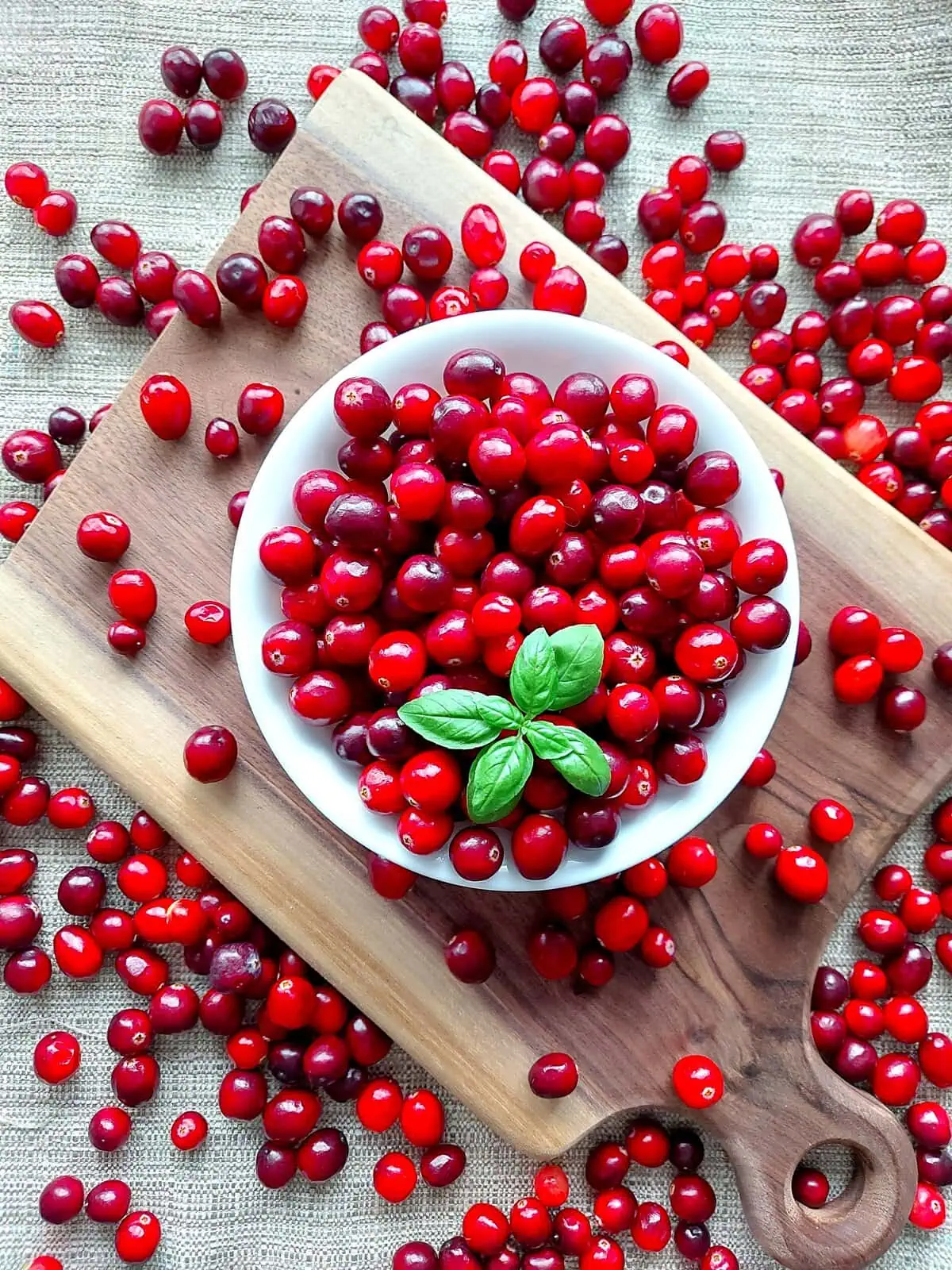
Fresh or frozen cranberries — give you those bright, jammy pockets of tartness. There’s no need to thaw frozen cranberries first. These also help keep the dough cold. Blueberries are a great swap.
Buttermilk — adds tang, activates the baking powder for a good rise, and creates a moist, tender interior. If you don’t have buttermilk, add 1 tablespoon of white vinegar or lemon juice to 1 cup of regular milk and let it sit for 5 minutes.
Vanilla extract — gives the scones a warm, bakery-style aroma.
Milk to brush on top — a light milk wash before baking gives the tops a golden, slightly glossy finish.
Equipment You’ll Need
– parchment paper
How to Make This Eggless Scone Recipe
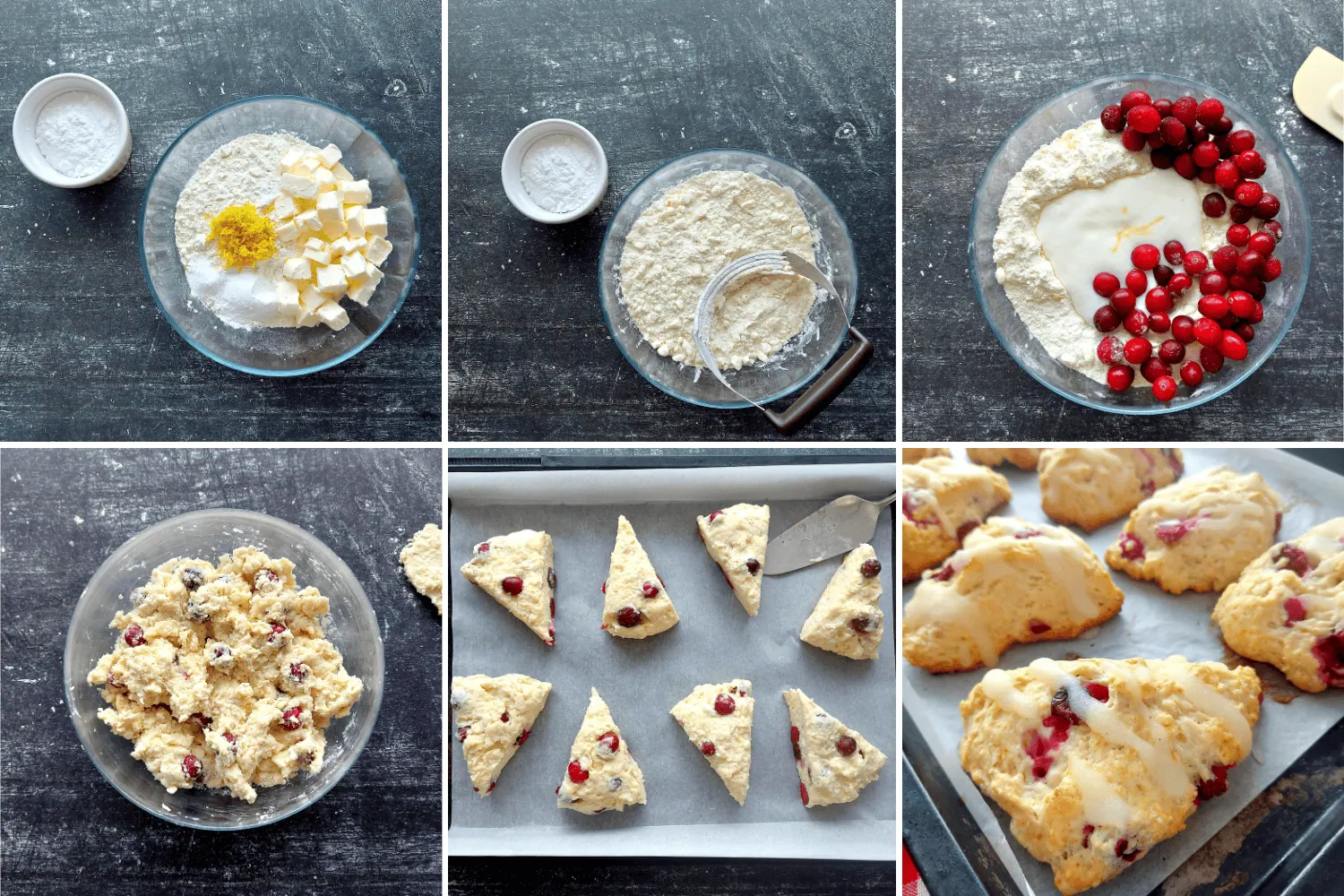
(To make this recipe as easy as possible, I’ve included step-by-step photos. For the exact measurements, full printable recipe, and details, see the recipe card at the end of this post.)
The most important rule for any eggless scone recipe: keep everything cold and don’t overwork the dough. Cold butter = flaky layers. Overworked dough = tough, dense scones. Everything else is straightforward.
Step 1 – Prep Your Workspace
Preheat your oven to 400°F (200°C). Line a baking sheet with parchment paper and set it aside. If your kitchen is warm, pop your mixing bowl in the freezer for a few minutes before you start.
Step 2 – Mix the Dry Ingredients
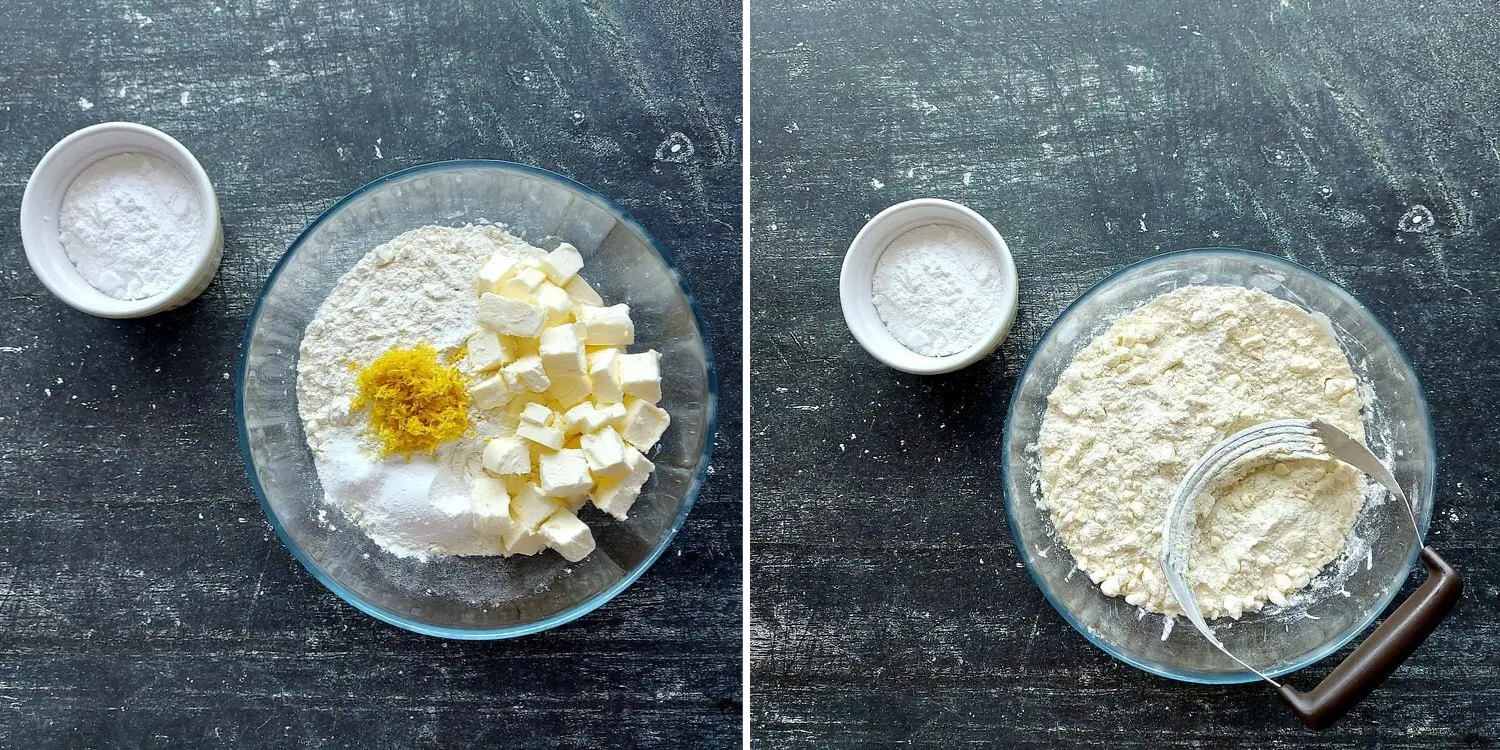
In a large bowl, whisk together the flour, baking powder, salt, and lemon zest until evenly combined. Don’t add the caster sugar yet.
Step 3 – Cut In the Cold Butter
Add the cold butter cubes to the flour mixture. Using a pastry cutter, two forks, or your fingertips, work the butter into the flour until the mixture resembles coarse crumbs — you want pea-sized butter pieces scattered throughout, not a uniform sandy texture. Those butter chunks are what create the flaky layers. If you’re using your hands, work quickly so the heat from your palms doesn’t melt the butter. Then, stir in the caster sugar.
Step 4 – Add the Buttermilk and Cranberries
Make a well in the middle and add the buttermilk, vanilla extract, and fresh or frozen cranberries. Stir gently with a fork or spatula just until the dough comes together. The dough will look shaggy and imperfect, and that’s exactly right. Overmixing develops the gluten and makes your scones tough.
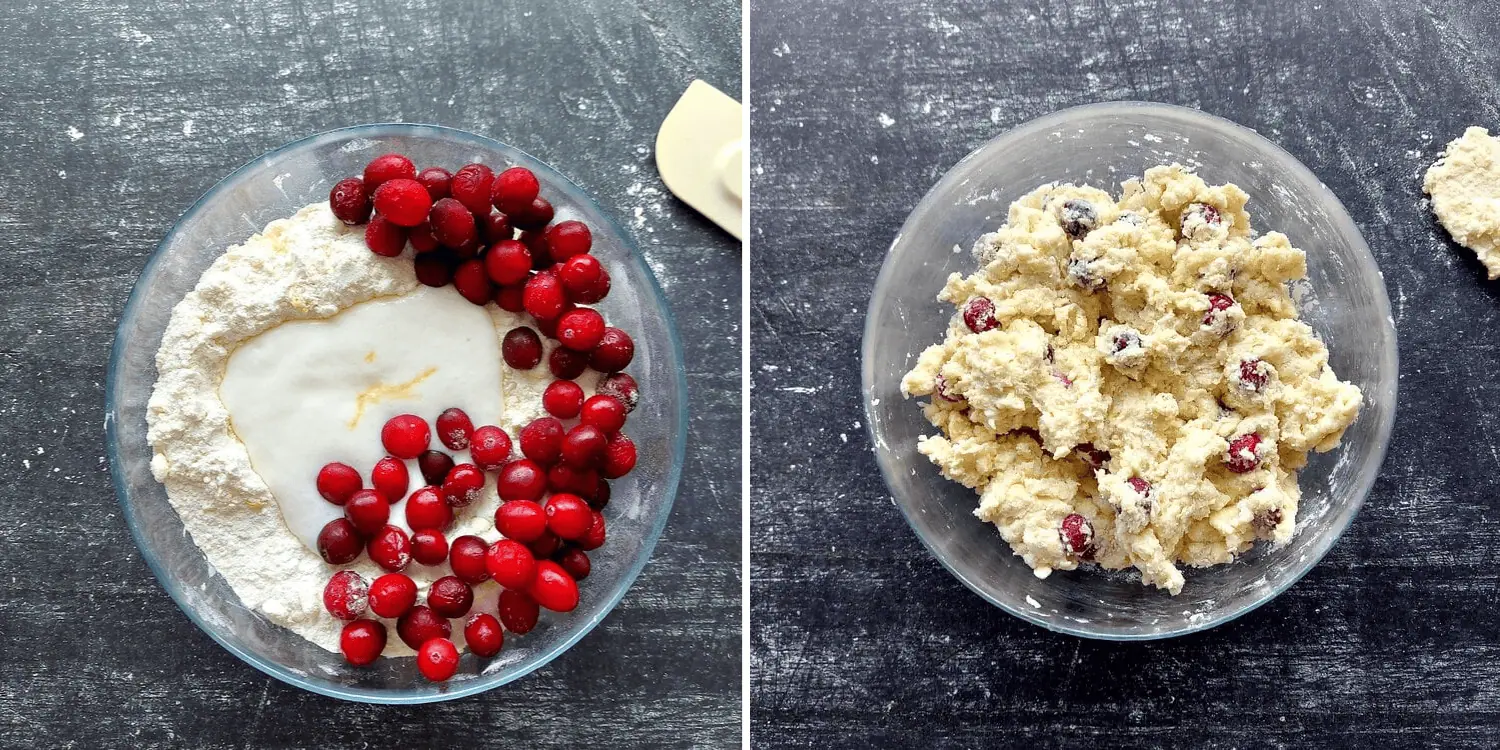
Step 5 – Roll, Chill, and Cut
Turn the dough out onto a lightly floured surface. Pat it gently into a disk about 1 inch thick. Don’t use a rolling pin or press hard. Wrap in a plastic wrap and freeze for 15 minutes. This re-firms the butter and helps the scones hold their shape in the oven rather than spreading. Take the dough out of the freezer and cut it into 8 equal slices like a pizza (or use a sharp pastry cutter to cut out rounds). Use a sharp knife and press straight down when cutting so as not to seal the edges and prevent the scones from rising.
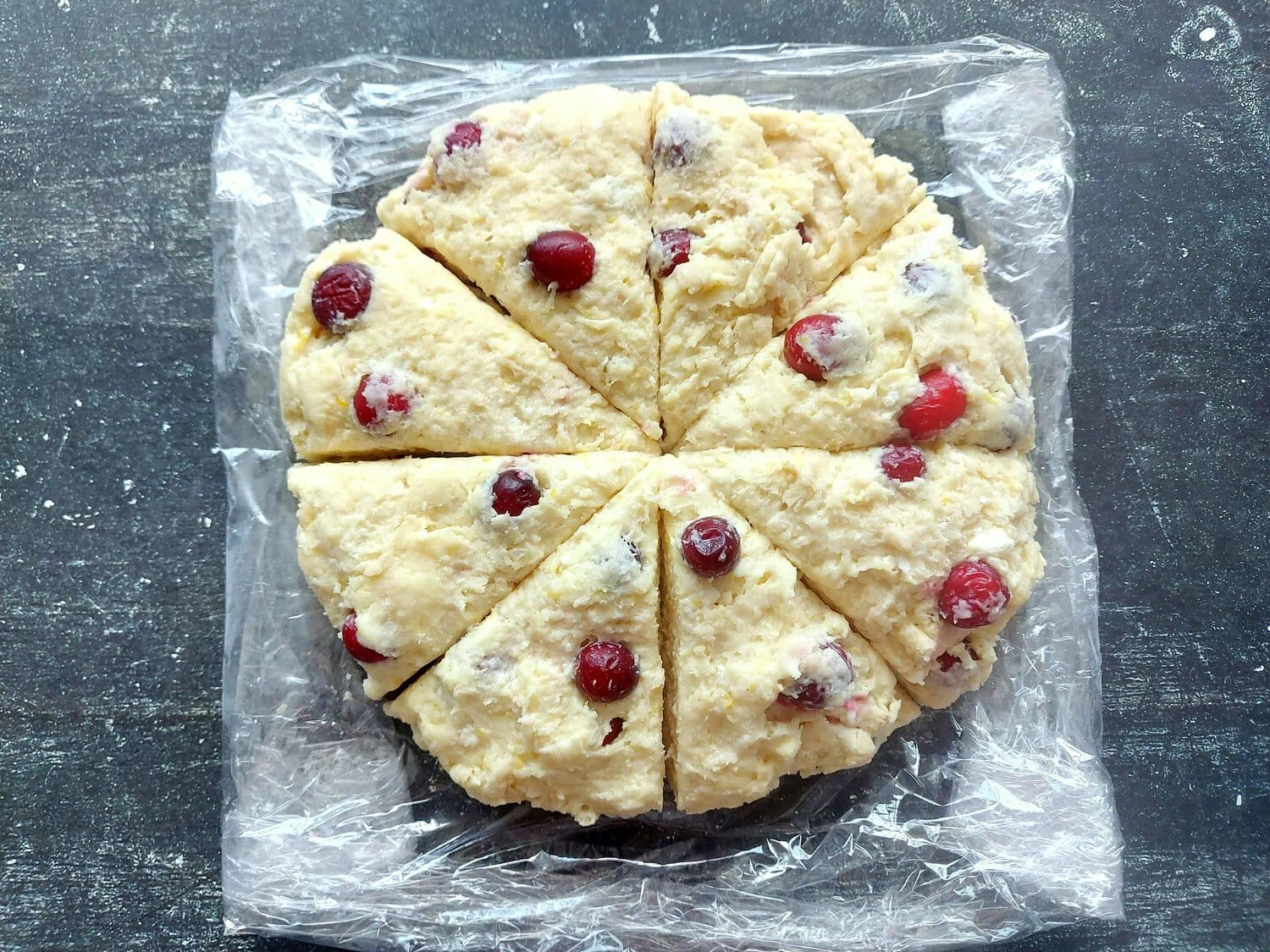
Step 6 – Brush with Milk or Heavy Cream
Place the cut scones on your prepared baking sheet and brush the tops lightly with milk.
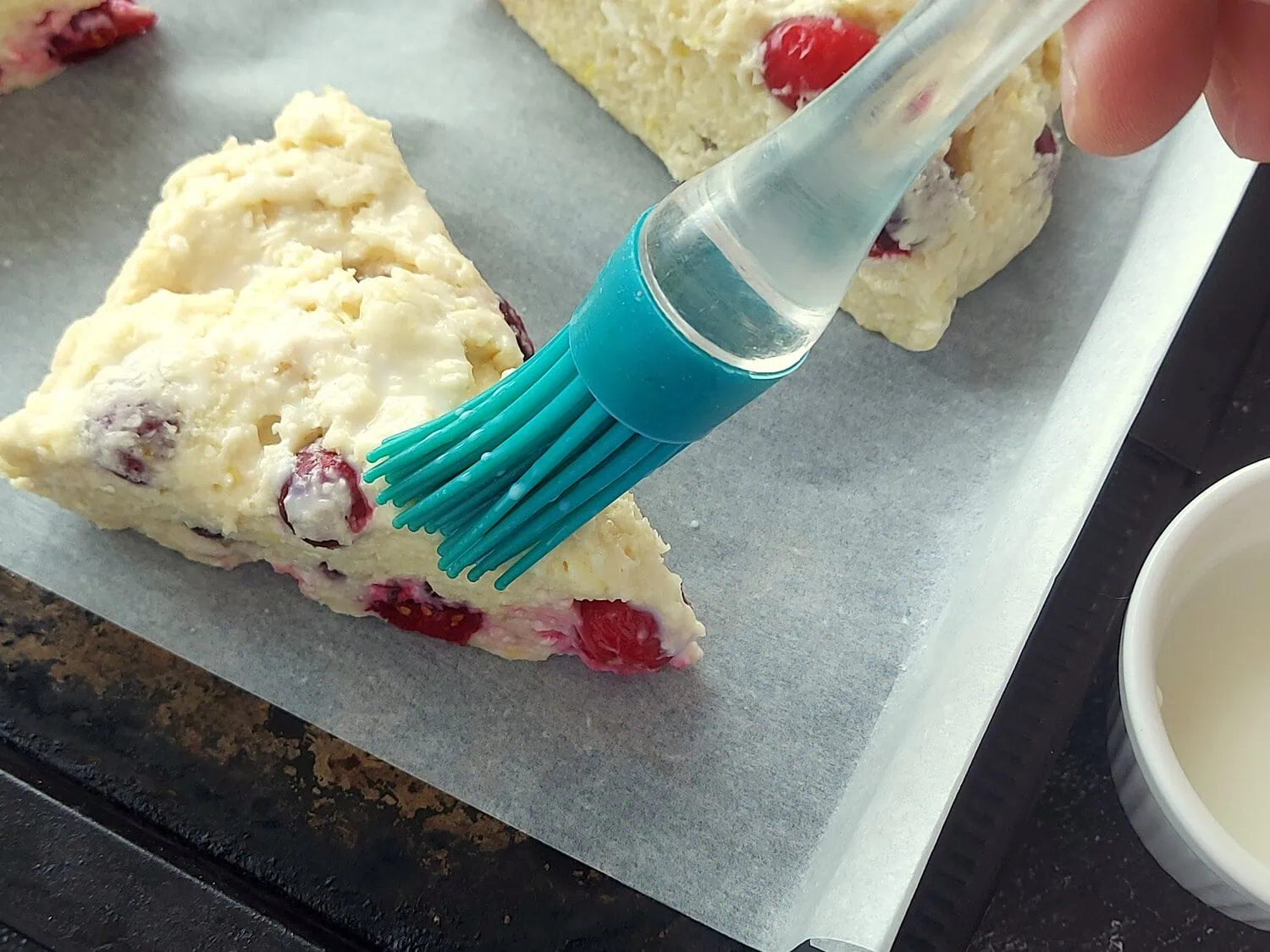
Step 7 – Bake and Enjoy
Bake for 20-30 minutes at 400°F (200°C) until the tops are golden brown and the edges look set. A wooden skewer inserted into the center should come out clean. Transfer to a wire rack. These are best eaten warm, within the first hour of baking.
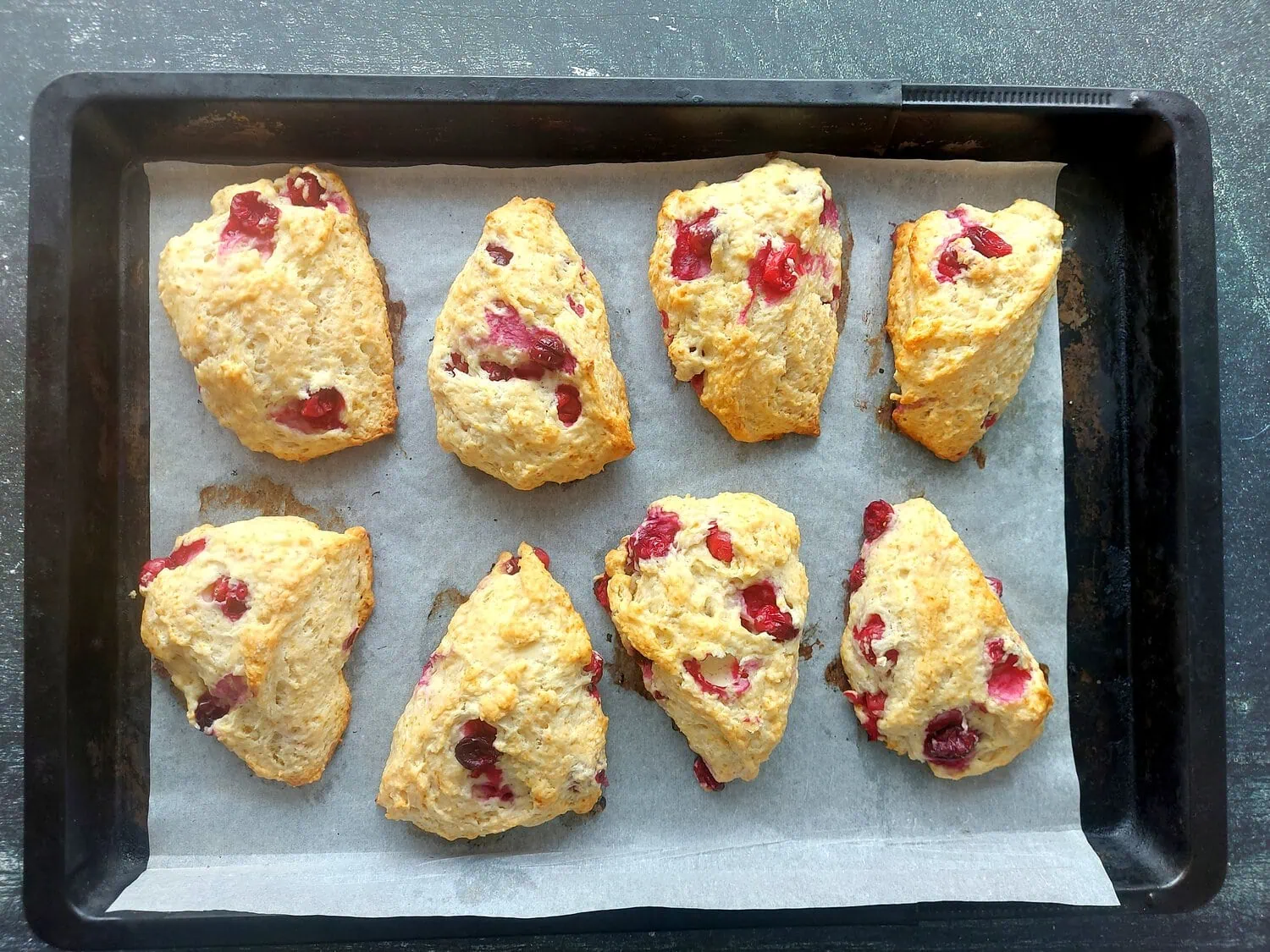
Step 8 – Prepare the Lemon Glaze
While the scones are baking, prepare the lemon glaze. Mix the confectioners’ sugar with the lemon juice and drizzle over the scones. Enjoy!
Tips & Tricks for Making the Best Eggless Scones
The colder the butter, the better! — This is the most important thing when making scones! You can use refrigerated butter or frozen butter, which you will then grate, as it is hard to cut. The butter has to be cold; otherwise, the scones will have more of a bread texture than a scone-like texture.
Don’t overwork the dough — Mix only until the dry streaks disappear. If the dough is overworked, the scones will turn out dense and chewy instead of nice, crumbly, and flaky. The dough should look rough and uneven — that’s correct.
Use fresh baking powder — Test it by dropping a teaspoon into hot water — if it bubbles vigorously, it’s active. If not, it needs replacing.
Cold buttermilk, too — Straight from the fridge. Cold liquid + cold butter = maximum flakiness.
Don’t skip the chill — Especially in a warm kitchen. 15–20 minutes in the freezer makes a real difference to how well the scones hold their shape.
Press the knife or cutter straight down — Don’t twist. Twisting seals the cut edges, and the scones won’t rise as tall.
Watch the oven — Overbaked scones go dry fast. Pull them when the tops are golden, and the edges look just set.

Variations and Substitutions
Flour – Pastry flour gives a slightly more delicate crumb, but all-purpose flour is a reliable substitute. Some bakers use self-raising flour and reduce the baking powder accordingly.
Fruit – The cranberry-lemon pairing in this recipe is intentional — the tartness plays well against the butter. But eggless blueberry scones are an equally popular variation. Blueberries (fresh or frozen) work perfectly with the same dough. Dried cranberries can be used in a pinch, though they’re sweeter and less tart than fresh.
Milk options – Buttermilk gives the best result in this eggless scone recipe with buttermilk — it’s tangy, activates the baking powder well, and produces a moist interior. If you don’t have it, whole milk with a splash of lemon juice or vinegar is the next best option. Plant-based dairy like coconut milk, oat milk, almond milk, or vegan butter can also be used to make vegan scones, though the texture will be slightly different.
Glaze options – You can replace the lemon glaze with some whipped cream, mascarpone cheese, or clotted cream and jam for a more traditional presentation.

Make-Ahead, Storage, and Freezing
My recommendation is that the best-tasting scones are the ones that are still warm or at room temperature, right out of the oven. This is when they are at their best.
Room Temperature or Refrigerator
Store baked scones in an airtight container at room temperature for up to 2 days, or in the refrigerator for up to 7 days. The texture softens a bit by day two, but a few minutes in a low oven (300°F / 150°C) will revive them.
Refrigerating Unbaked Dough
Shape and cut the scones, then refrigerate them on the baking sheet (covered in plastic wrap) overnight or for up to two days. Bake directly from the fridge, adding 1–2 extra minutes to the bake time.
Freezing
Freeze shaped, unbaked scones on a parchment-lined baking sheet until solid, then transfer to a freezer bag. They keep for up to 3 months. Bake straight from frozen at 400°F (200°C), adding 5–7 minutes to the original bake time. No thawing required.
You can also freeze baked scones, though the texture is better when you freeze the unbaked dough. Wrap each scone tightly in plastic wrap and place the scones in a freezer bag or an airtight container. Squeeze out as much air as possible. Freeze them up to 2 months. When you want to enjoy them, thaw them and place them in the oven at 320ºF (160ºC) for a few minutes.
How to Serve These Eggless Scones
These scones are finished with a lemon glaze, which ties the cranberry and citrus flavors together beautifully. That said, you can also serve them with:
Clotted cream, mascarpone, or whipped cream + whatever jam you fancy – blueberry, orange for a classic afternoon tea
Softened salted butter — simple, and it melts beautifully into a warm scone
Lemon curd — which pairs well with the lemony note already in the dough
A drizzle of honey with a pinch of sea salt, if you want something slightly sweet and savory

FAQs
How do you make scones without eggs?
Scones don’t actually need eggs to hold together. Traditional British scones are actually often made without eggs. Cold butter and buttermilk do all the work. The butter creates flaky layers as it steams in the oven, while the buttermilk adds moisture and activates the baking powder for a good rise. That’s it — no egg replacer needed.
Can I make these scones dairy-free?
You can substitute cold vegan butter, coconut milk, oat milk, or soy milk (with a teaspoon of vinegar to mimic buttermilk). The result is slightly different in texture but still good.
Can I make these as drop scones instead of cutting them?
Yes. Drop the dough by large spoonfuls onto the prepared baking sheet instead of patting and cutting. The shape will be irregular, but the flavor and texture are the same.
Why didn’t my scones rise?
There could be several reasons for flat scones. One is that the butter was not cold enough before baking – it melted into the dough instead of steaming and creating layers. Another reason could be that you overworked your dough, developing the gluten, which made the scones dense and prevented rise. You need to mix the ingredients just until the dough comes together and flatten everything down, without overworking the dough. Another issue could be that the knife was not sharp enough and squished the edges together too much, preventing the layers from rising. Another reason could be that the baking powder had expired, or that the oven was not hot enough.
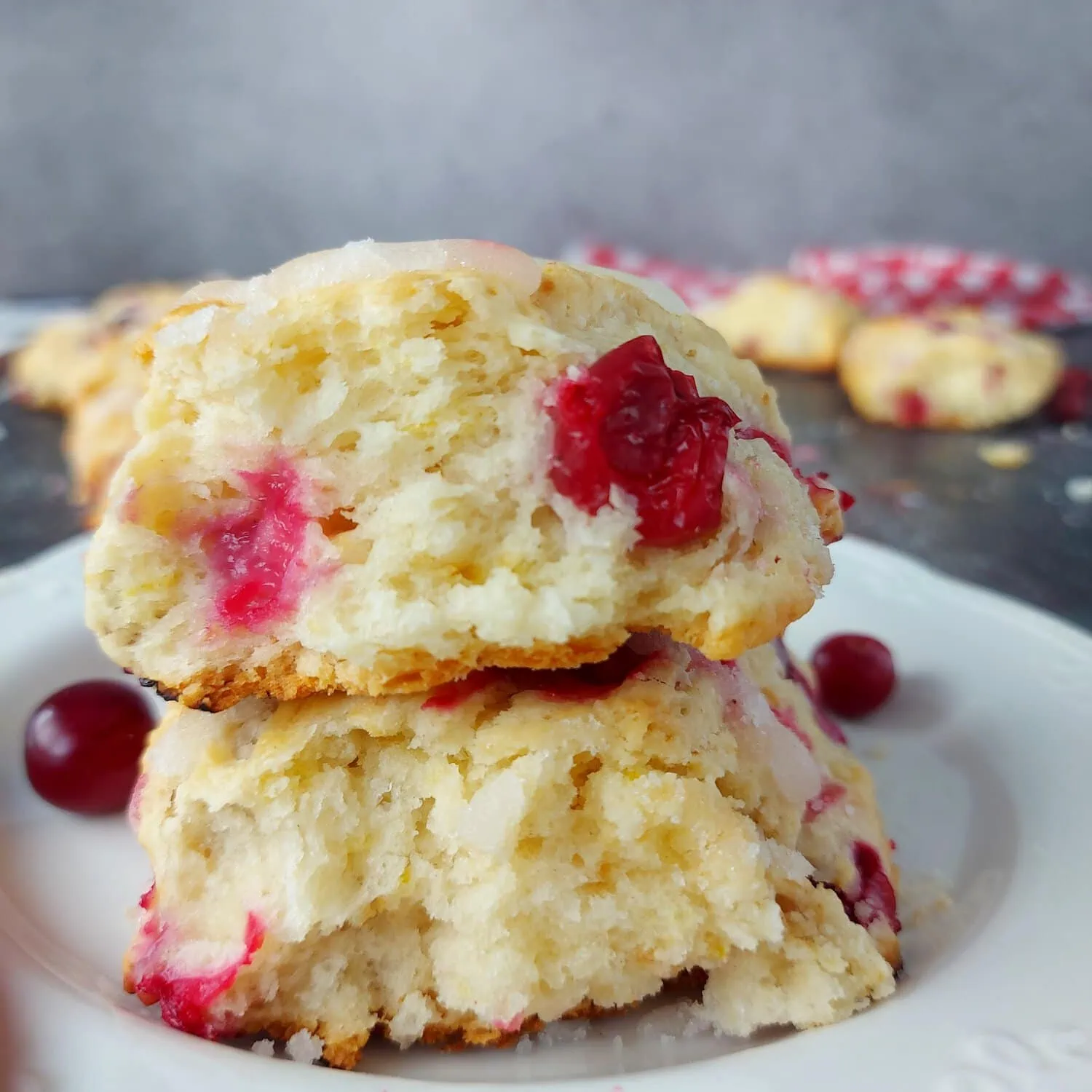
This Eggless Scone Recipe delivers light, tender, and beautifully buttery scones, with crisp golden edges and a soft, fluffy center. Finished with a simple lemon glaze, they’re just as welcome at a weekend brunch as they are with your morning coffee or an afternoon cup of tea.
If you enjoyed these eggless scones, be sure to save the recipe for your next weekend bake. And if you add your own twist — dried fruit, chocolate chips, citrus zest, or a sprinkle of coarse sugar on top — I’d love to hear how they turned out in the comments. Reviews are always appreciated, too. Thanks so much for baking along with me!
Other recipes you may like
- Easy Fresh Blackberry Cobbler Recipe (Old-Fashioned)
- Sinfully Easy 3 Ingredient Peach Cobbler
- Salted Caramel Tiramisu | Creamy, Easy & No-Bake
- No Bake Tiramisu Cheesecake People Go Crazy For!
- Sour Cherry Soup (Cold and Refreshing Summer Recipe)
- Healthy Ham and Mushroom Frittata Recipe (So good!)
- Quick and Healthy Breakfast Quiche Recipe with Spinach

Best Eggless Scone Recipe (Cranberry Lemon)
Ingredients
FOR THE SCONES
- 2 cups (280 g) pastry flour (or all-purpose flour)
- ½ cup (67 g) caster sugar
- 1 TBSP baking powder
- 1 TBSP zest (1-2 lemons)
- ½ tsp salt
- ½ cup (115 g) cold butter (salted or unsalted), cut into cubes
- 1 cup (235 ml) buttermilk
- 1 cup (180 g) fresh or frozen cranberries (or blueberries)
- 1 tsp vanilla extract
- 2-3 TBSP milk to brush on top
FOR THE LEMON GLAZE (optional):
- 1 cup (120 g) confectioners’ sugar
- 2-3 TBSP lemon juice
Instructions
SCONES
- Preheat the oven to 400ºF (200ºC). Place the oven rack in the center of the oven. Line a baking sheet with parchment paper or with a silicone mat and set it aside. If your kitchen is warm, pop your mixing bowl in the freezer for a few minutes before you start.
- In a large bowl, whisk together all the dry ingredients except for the sugar: flour, baking powder, salt, and lemon zest.
- Dice the cold butter into 1/2-inch cubes. Add it into the bowl with the dry ingredients. Using a pastry cutter, two forks, or your fingertips, work the butter into the flour until the mixture has a coarse crumb texture — you want pea-sized butter pieces scattered throughout, not a uniform sandy texture. Those butter chunks are what create the flaky layers. These butter pieces will ensure that fluffy, flaky texture of the scones. If you’re using your hands, work quickly so the heat from your palms doesn’t melt the butter.
- Make a small well in the flour mixture and add the wet ingredients: buttermilk, vanilla extract, and fresh or frozen cranberries. Use a fork to mix everything until a rough dough starts to come together. If the dough is a bit too crumbly, add a bit more buttermilk. Stop as soon as you no longer see dry flour streaks — the dough will look shaggy and imperfect, and that’s exactly right. Overmixing will make your scones tough.
- Turn the dough out onto your lightly floured surface. Pat it gently into a disk about 1 inch thick. Don’t use a rolling pin or press hard. Wrap in a plastic wrap and freeze for 15 minutes. This re-firms the butter and helps the scones hold their shape in the oven rather than spreading.
- Take the dough out of the freezer. Cut it in half, then each half into 4 wedges like a pizza. Use a sharp knife and dip in flour each time you cut. This will prevent the squishing down of the dough, which will prevent rising (you can also use a sharp pastry cutter to cut out rounds).
- Place the scones onto the prepared baking sheet, leaving about 2-3 inches between them so they can rise properly. Brush the tops lightly with milk or heavy cream. You can also sprinkle some caster sugar.
- Place the scones in the preheated oven and bake for 25-30 minutes until the tops are golden brown and the edges look set. A wooden skewer inserted into the center should come out clean. Keep an eye to make sure you don't overcook them.
- Let the scones cool for 5 minutes in the baking tray, then transfer to a wire rack to fully cool. These are best eaten warm, within the first hour of baking. Enjoy!
LEMON GLAZE
- While the scones are baking, mix the confectioners’ sugar and the lemon juice until well combined and drizzle the glaze over the scones.

Leave a Reply